Article: McClure's "Abraham Lincoln and Men of War-Times"
McClure's "Abraham Lincoln and Men of War-Times"

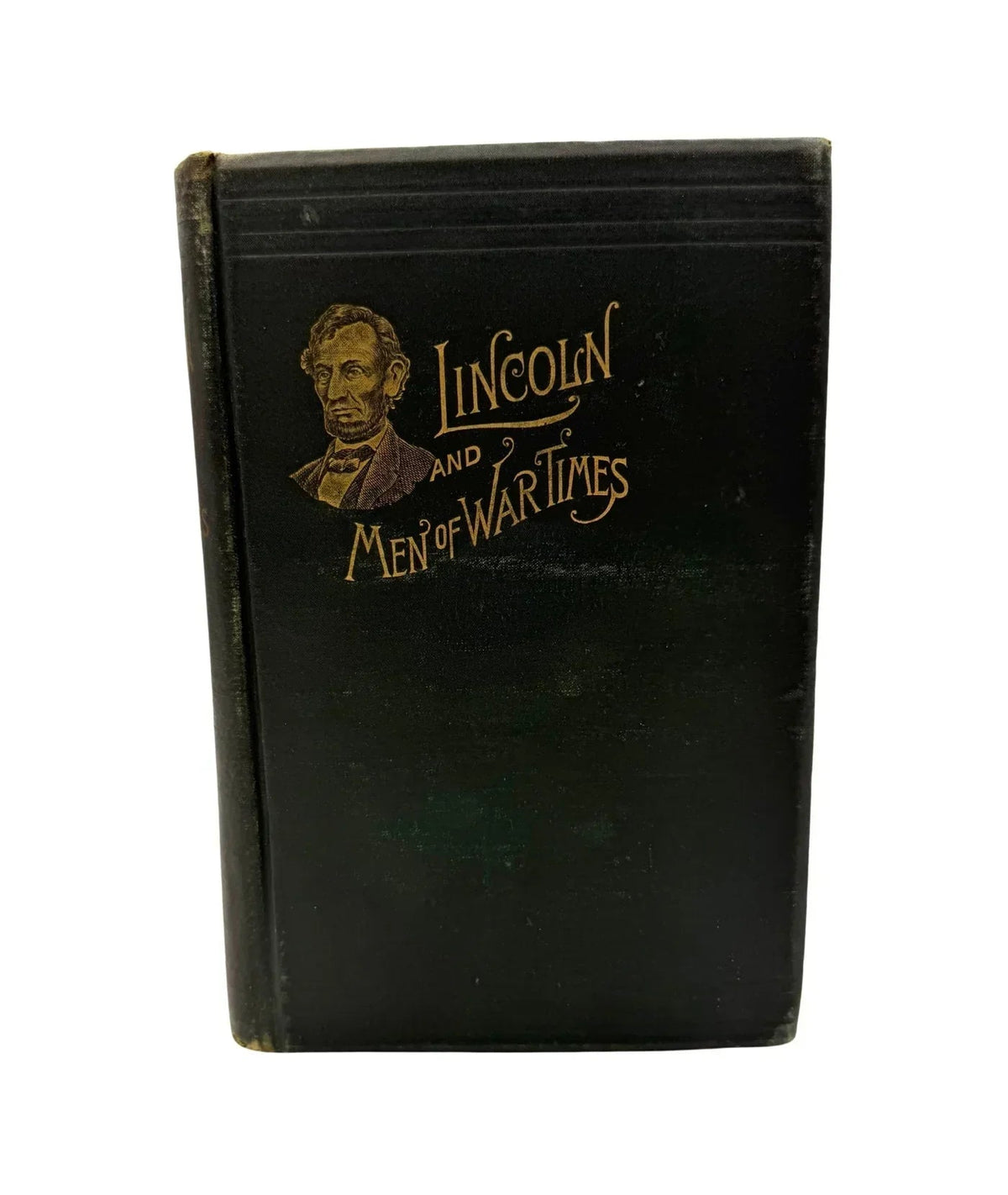
One of my favorite books on our shelves is Alexander McClure’s Abraham Lincoln and Men of War-Times: Some Personal Recollections of War and Politics During the Lincoln Administration, a first edition published in Philadelphia by The Times Publishing Company in 1892. The book is preserved in its original green cloth boards, with a portrait of Lincoln and the title gilt-embossed on the front board, and gilt titles on the spine. Inside, it is profusely illustrated, with a frontispiece portrait of Lincoln and more than thirty additional plates.
Alexander McClure was uniquely positioned to offer the kind of personal perspective that distinguishes this work. A prominent Pennsylvania politician, journalist, editor, and staunch supporter of the Republican cause, he was an early backer of Lincoln and played a pivotal role at the 1860 Republican National Convention. There, he and Governor Curtin helped steer Pennsylvania’s support away from Simon Cameron and William Seward and toward Lincoln’s nomination. As chairman of the Republican State Committee, he was subsequently instrumental in rallying Pennsylvania behind Lincoln’s presidency.

The book was not intended to be a biography of Lincoln or a conventional history of his administration. As McClure explains in his preface, it was written “simply to correct some popular errors as to Lincoln's character and actions.” He observed that so much “[had] been written of him by persons assuming to possess information obtained in the inner circle of his confidence,” and that “such conflicting presentations of his personal attributes and private and public acts have been given to the public,” that he felt it was his duty to contribute what he could from personal knowledge, “to correct some common errors in estimating his character, ability, and efforts.”
That firsthand perspective gives the book its particular character. McClure recounts Lincoln’s interactions with prominent military figures including Ulysses S. Grant, William Sherman, and George B. McClellan, as well as political figures such as James Buchanan, Salmon Chase, and John Nicolay. Through these recollections, he offers a view of the complicated relationships surrounding the president and of the strong, ambitious, and often difficult personalities Lincoln had to navigate around on a daily basis. McClure’s recollections illuminate how Lincoln handled those around him while leading his party, an army, and a nation through the Civil War. He also provides insight into the presidential campaigns of 1860 and 1864.

McClure’s own experiences during the war further shaped his perspective. An outspoken opponent of slavery and Democratic corruption, he used his Franklin County newspaper to advocate for Republican policies and criticize Confederate aggression, making him a target during the conflict. (So much so that Confederate forces burned his home in Chambersburg.) During the war he also served as an assistant adjutant general with the rank of major, helping to raise seventeen Pennsylvania regiments before resigning his commission in 1863. In 1864, he relocated to Philadelphia, opened a law office, and continued his political work, aiding Lincoln’s successful reelection that year.
McClure remained an influential figure in Pennsylvania politics, winning a seat in the state House of Representatives in 1865 as a member of the Union Party. He was also a frequent visitor to the White House, and his later recollections preserved firsthand observations of Lincoln and the people surrounding him during one of the most consequential periods in American history. As a result, Abraham Lincoln and Men of War-Times offers something different from a conventional biography of Lincoln or an account of his presidency. Instead, it is a collection of personal recollections from someone who participated in the political and military world he describes, and who sought to preserve his own understanding of Lincoln’s character, leadership, and relationships during the Civil War.