Article: An Important Printing of the Constitution
An Important Printing of the Constitution

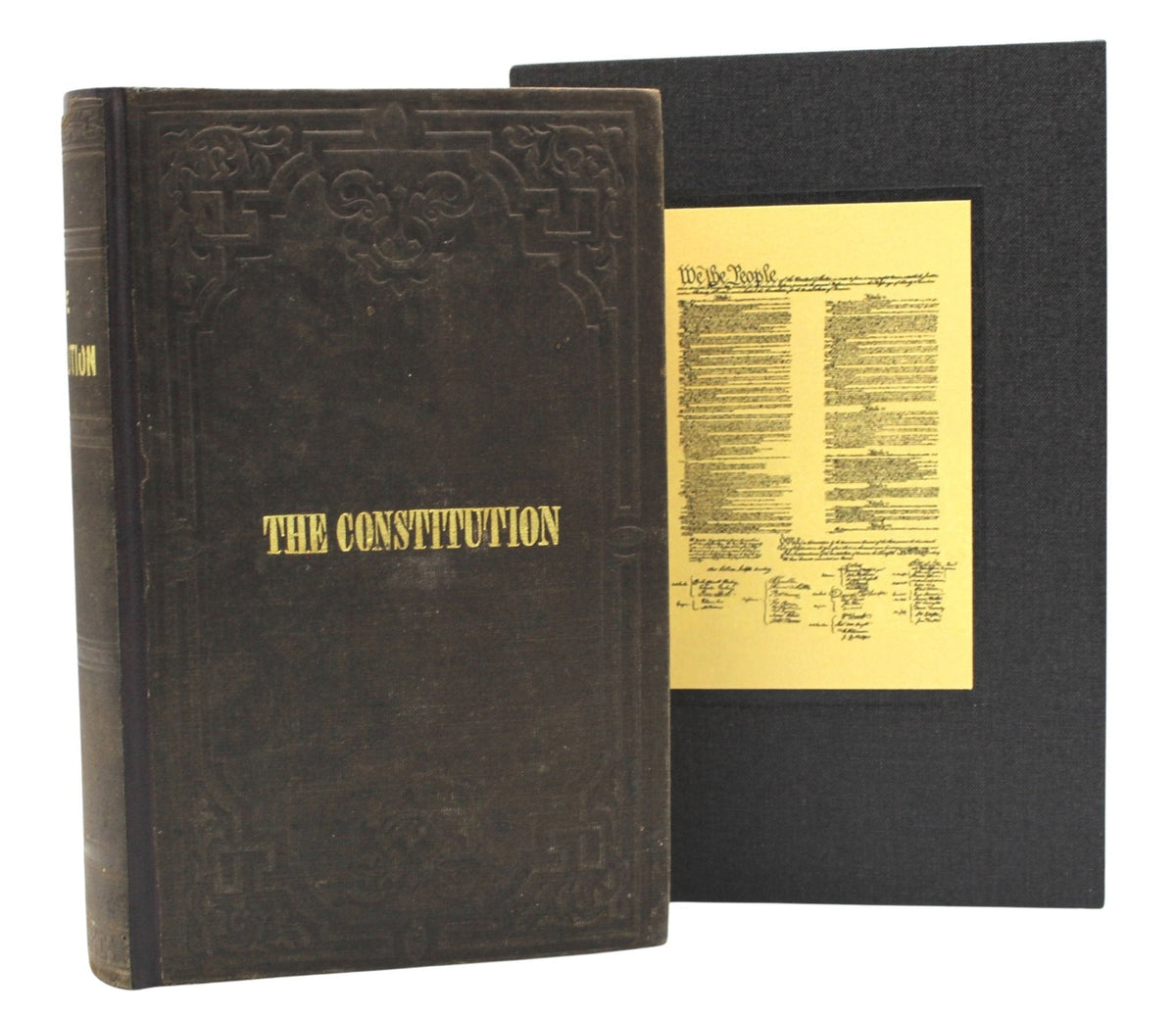
Our latest arrival is a seventh edition of William Hickey’s The Constitution of the United States of America, with an Alphabetical Analysis, published in Philadelphia in 1855. A member of the Senate’s clerical staff, William Hickey was concerned with inconsistencies and errors in the many printed versions of the Constitution circulating in the early republic. As Henry Bain recounts in his 2012 Prologue Magazine article, “Errors in the Constitution: Typographical and Congressional,” Hickey examined a copy that was at the time considered authoritative and discovered “several errors in the words, and sixty-five in the punctuation.” Determined to remedy these deficiencies, Hickey published his first edition of this book in 1847, placing a carefully corrected Constitution at the beginning of his comprehensive manual. The volume included an accompanying certification by Secretary of State James Buchanan that affirmed that the text had been compared with the engrossed, signed original of 1787 and found “correct, in text, letter, & punctuation.”
Hickey’s work addressed a significant problem in the early history of American constitutional publishing. At the time, the federal government had not established a consistent system for disseminating an authoritative printed text of the Constitution. Late 18th and early 19th century printers therefore relied on different existing copies, including earlier editions that contained transcription errors, inconsistent spelling, and variations in punctuation. But because the Constitution’s language defines the structure and powers of the federal government, textual accuracy was an important concern for legislators, legal practitioners, and even the general public seeking to understand the nation’s governing framework. Slight changes or inconsistencies in the text could eventually lead to different interpretations.


Over the years, Hickey continued to publish new editions of his book. By his seventh edition, it had grown into a substantial reference on American government and political history. Alongside the Constitution and its twelve amendments, the seventh edition includes the Declaration of Independence, the Articles of Confederation, the principal political acts of George Washington, presidential and vice-presidential electoral returns, and records of government officials and public documents. Its publication continued even after Hickey’s death in 1866, with later editions incorporating the three amendments adopted following the Civil War.
Hickey’s careful attention to the true text of the Constitution and his successful efforts at wide dissemination of his publication helped secure an official printing of the Constitution, so that the general public could read and know the text as it was originally written.