

The House at Pooh Corner by A. A. Milne, Illustrated by Ernest H. Shepard, First Edition, in Original Boards, 1928
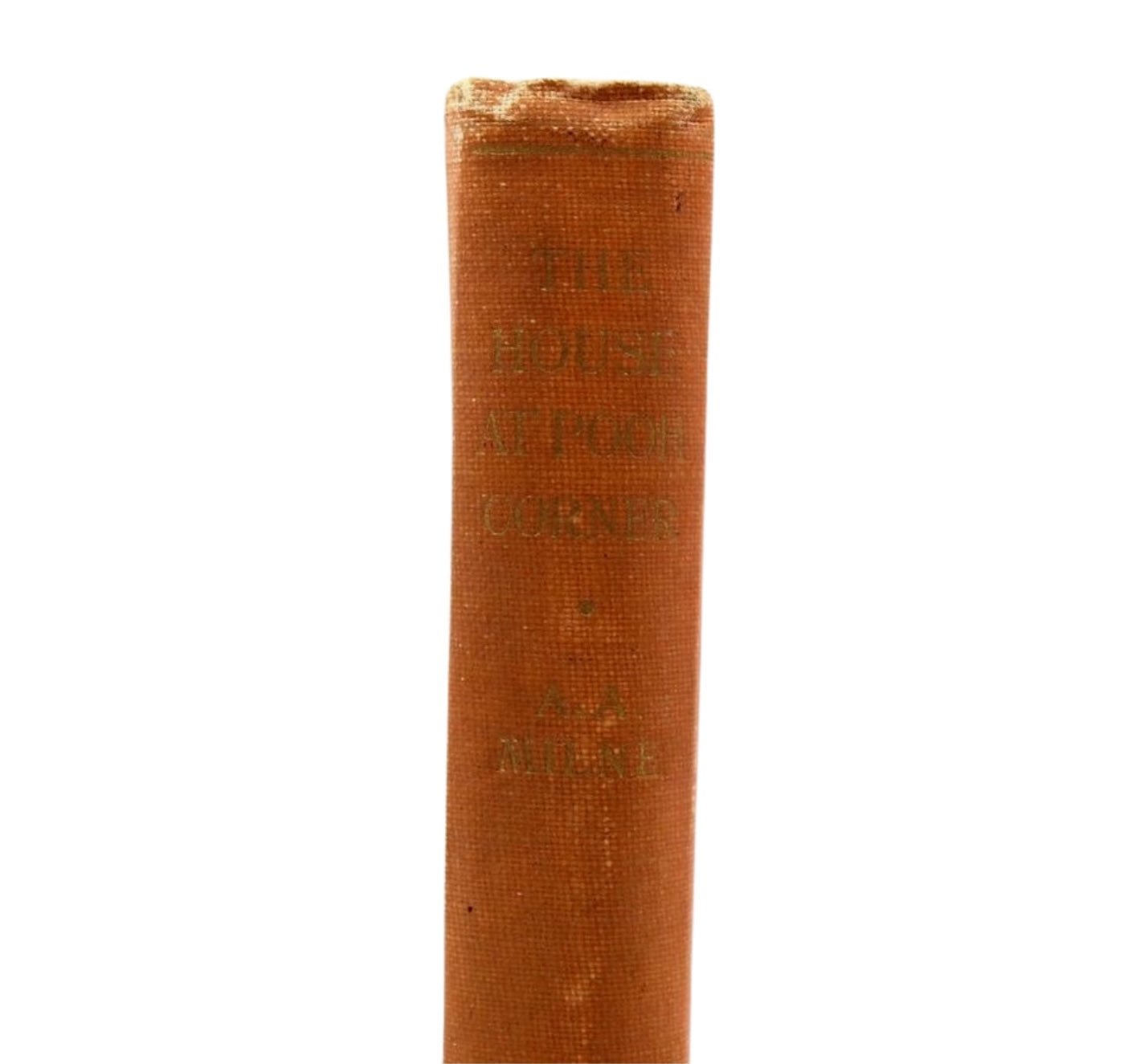
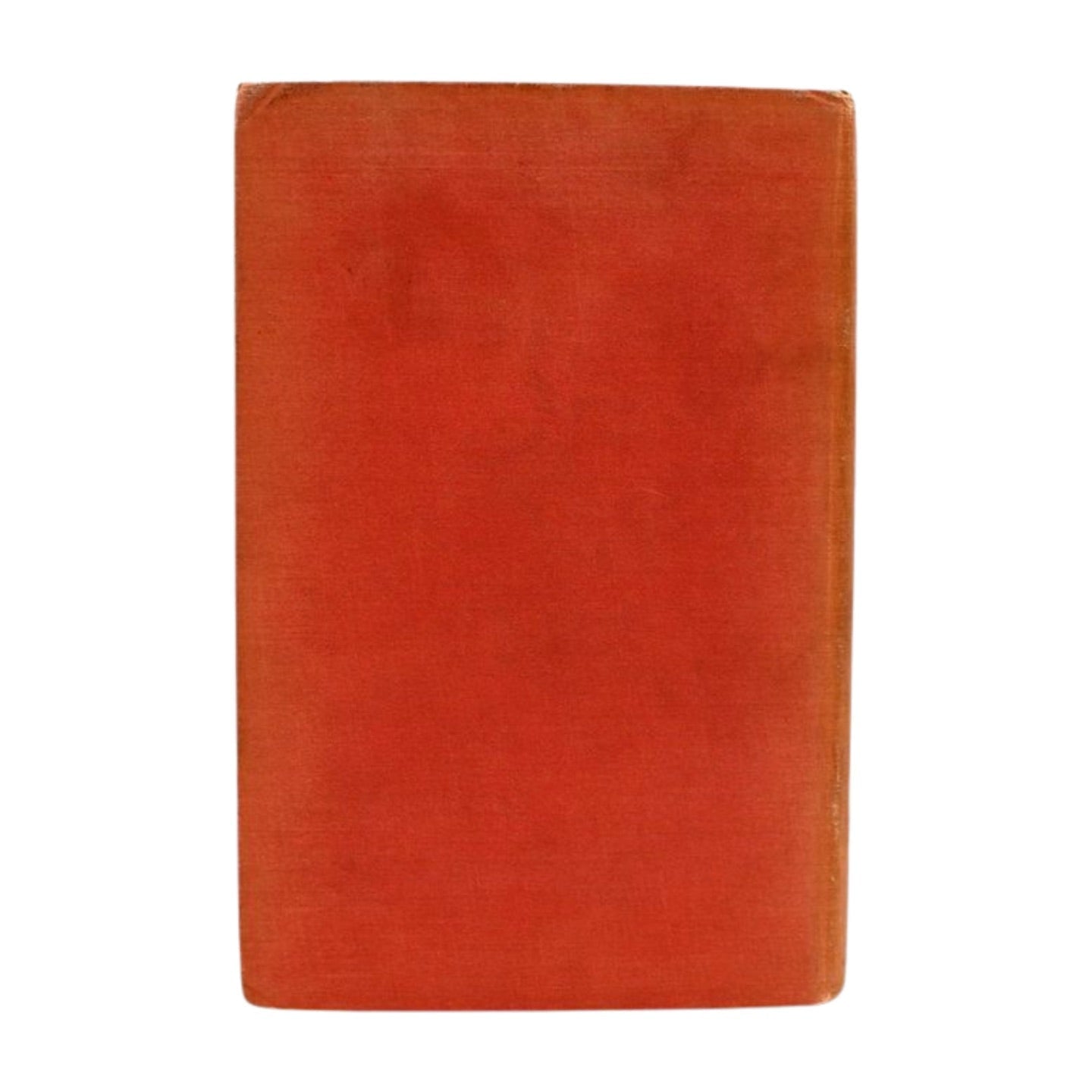
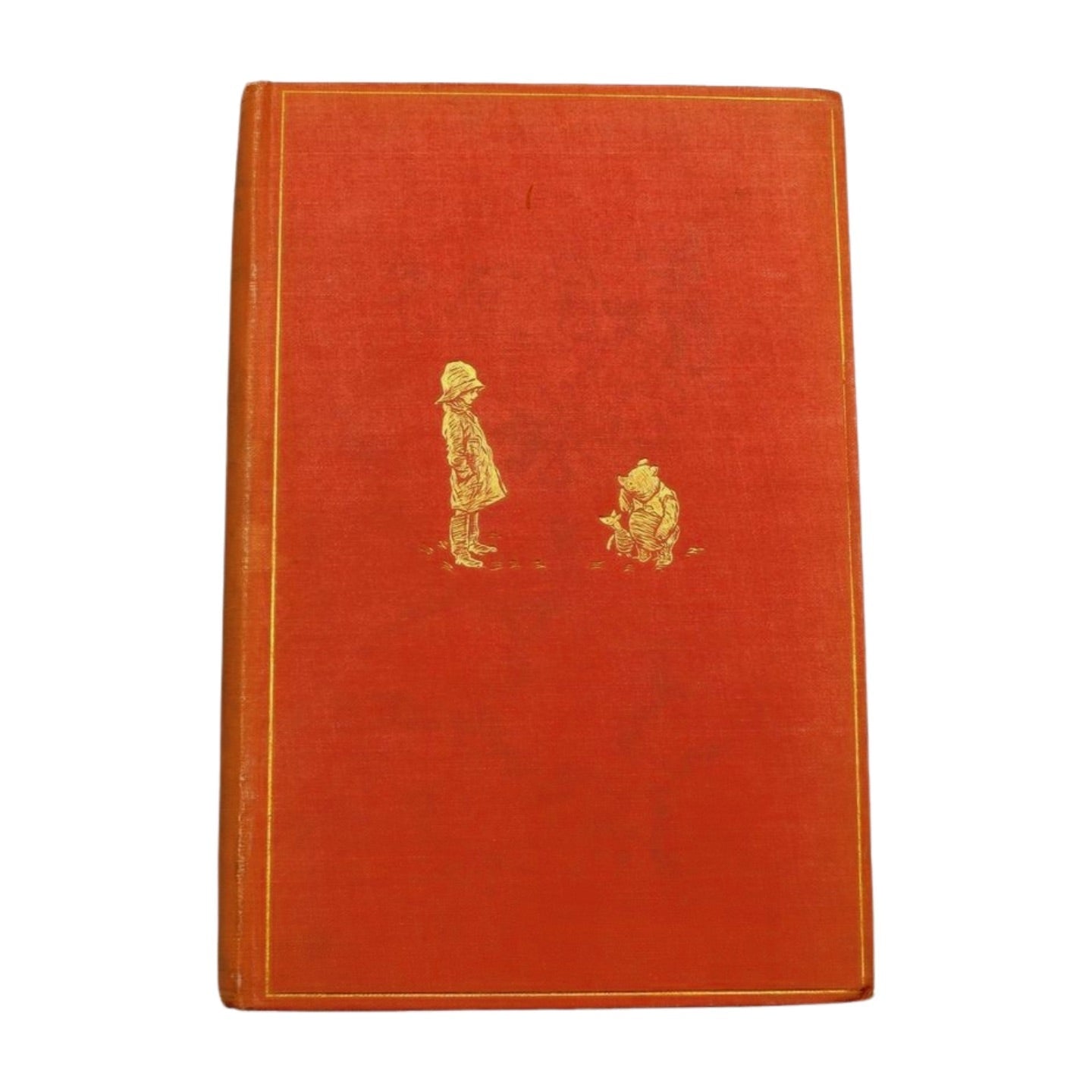
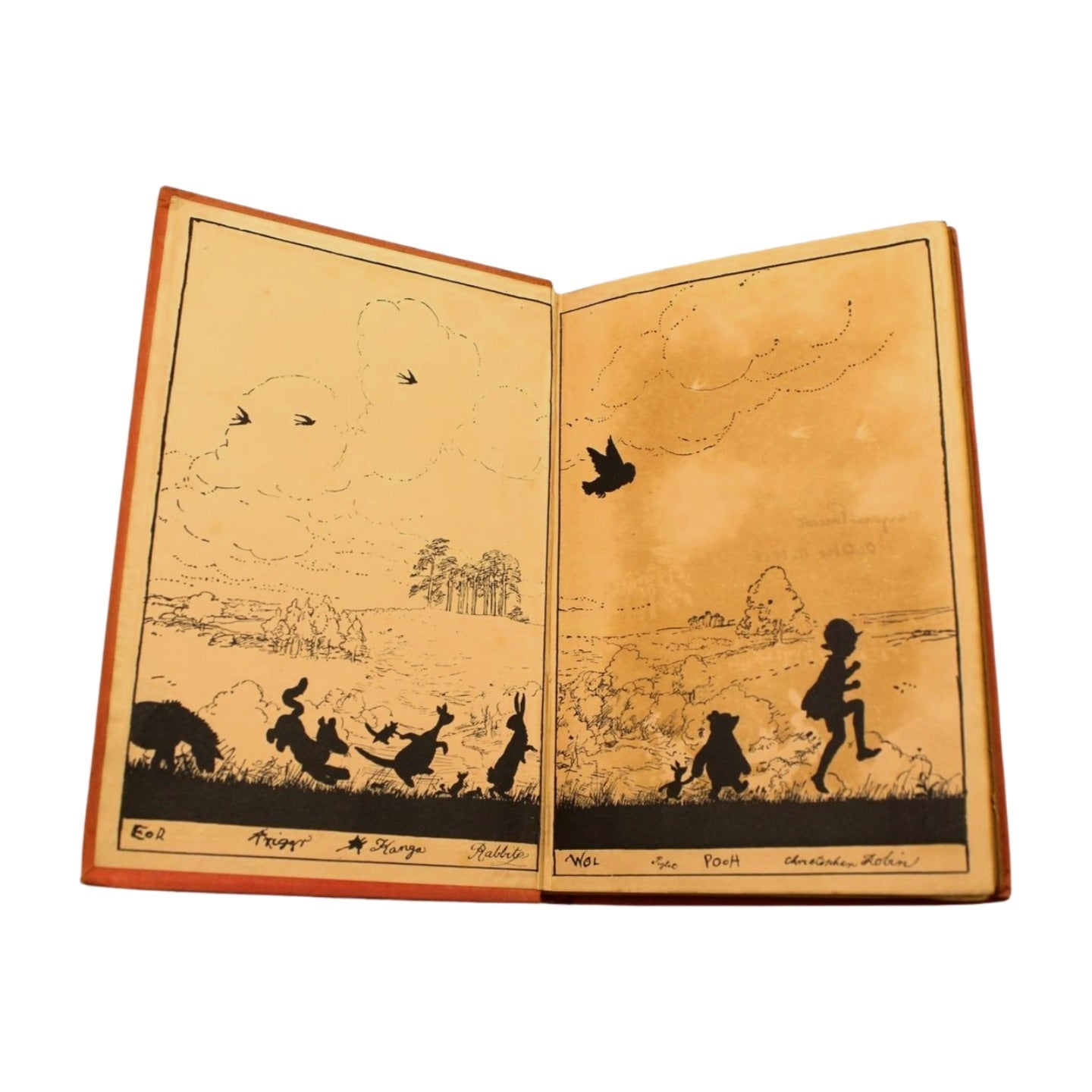
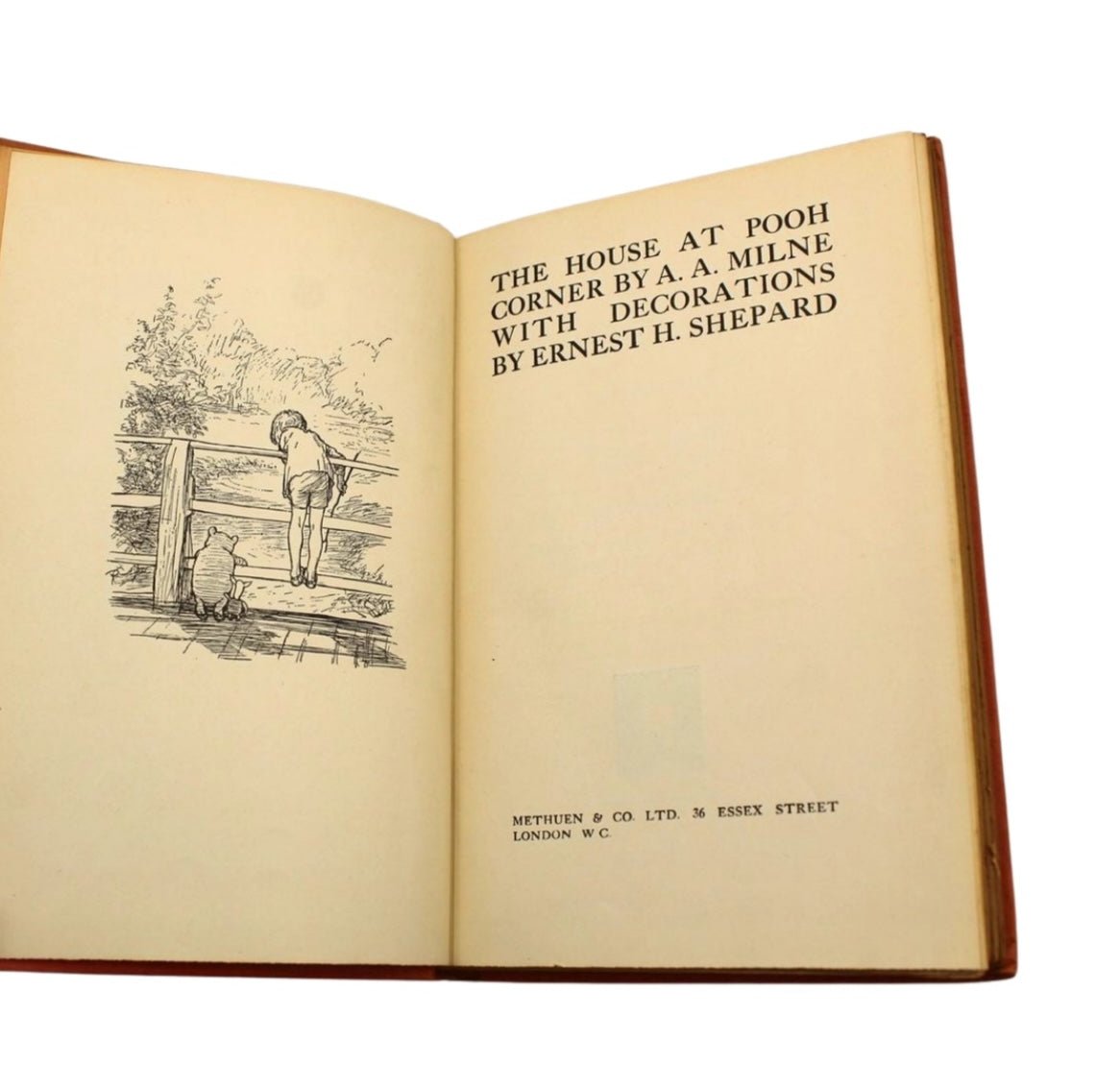
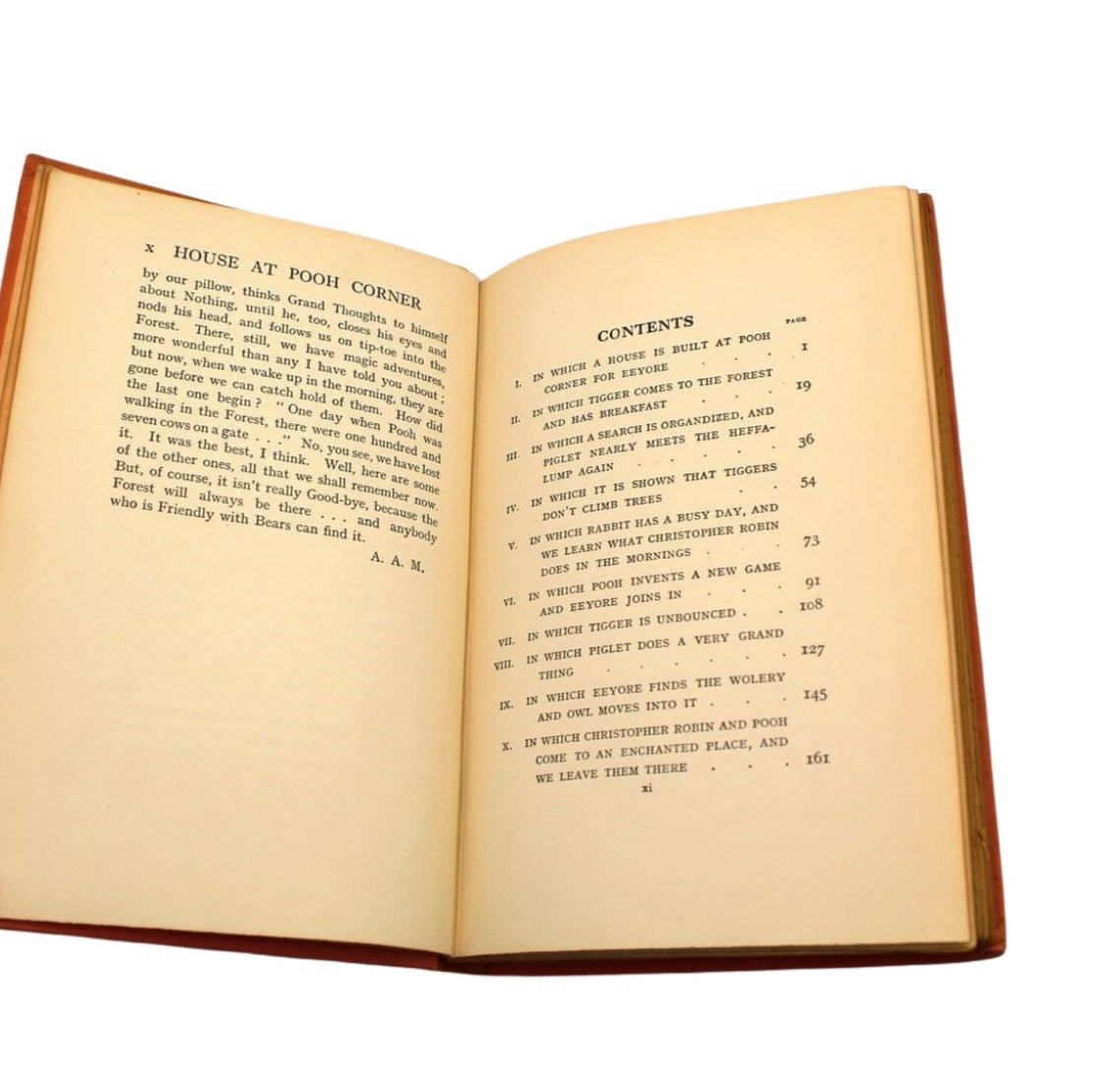
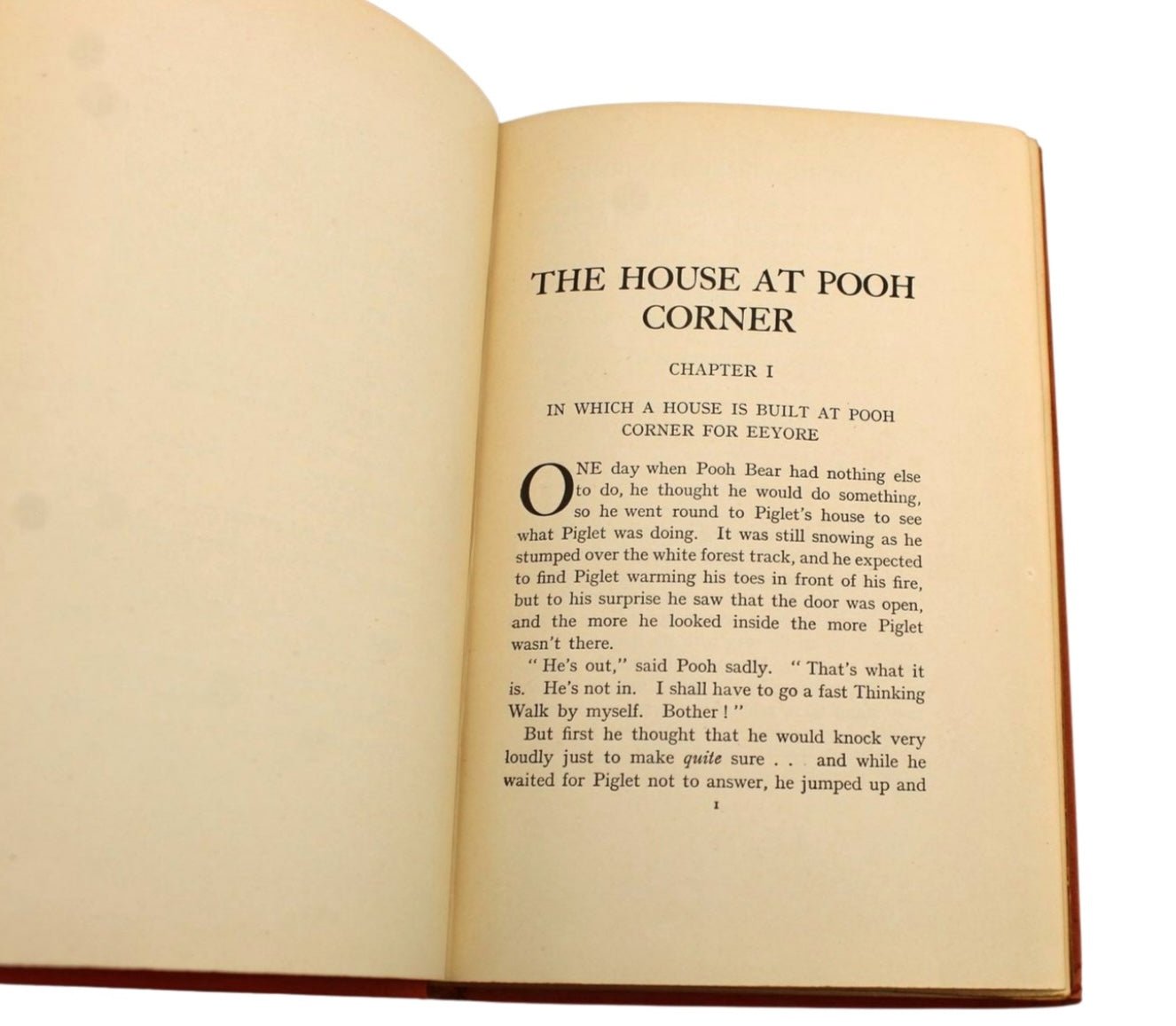
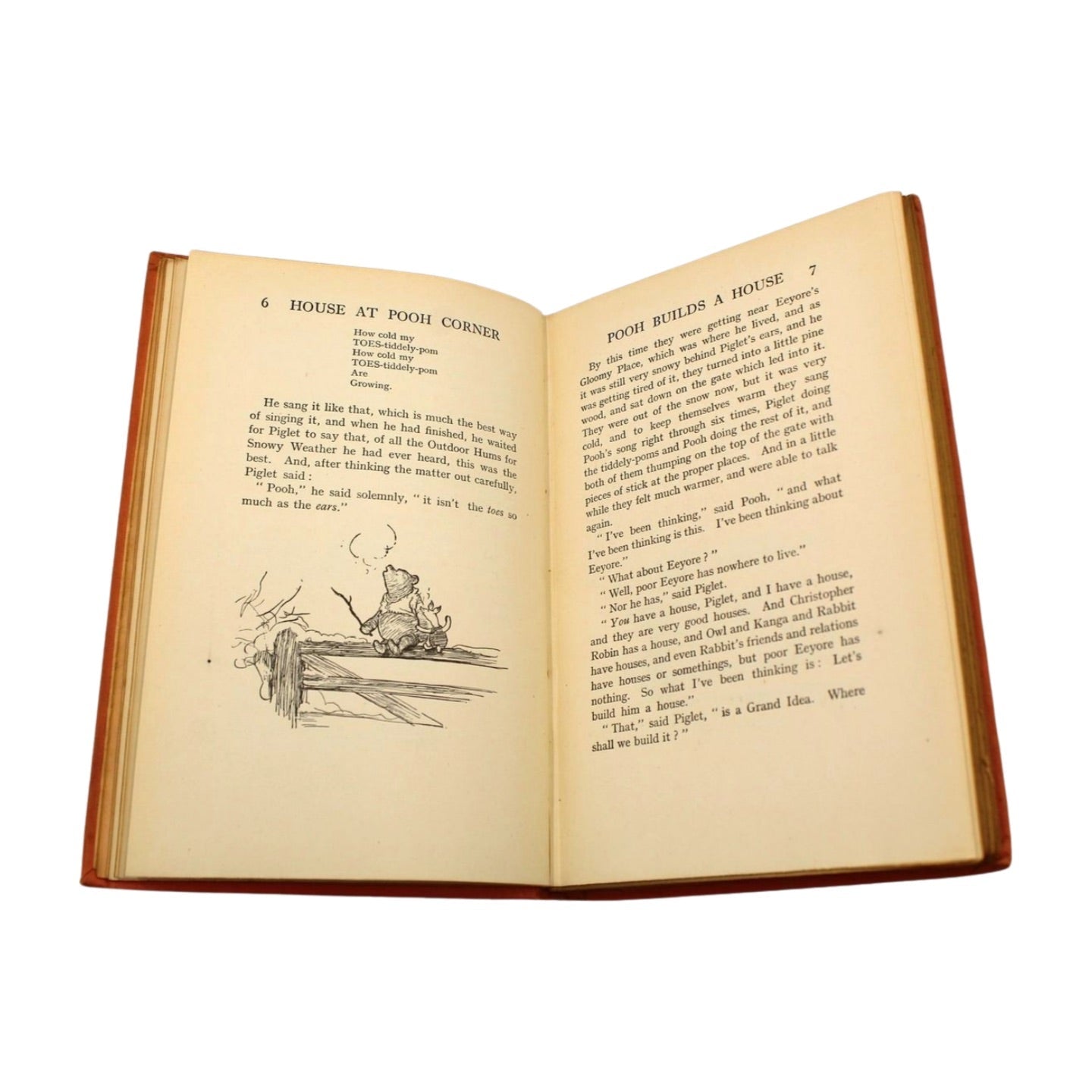
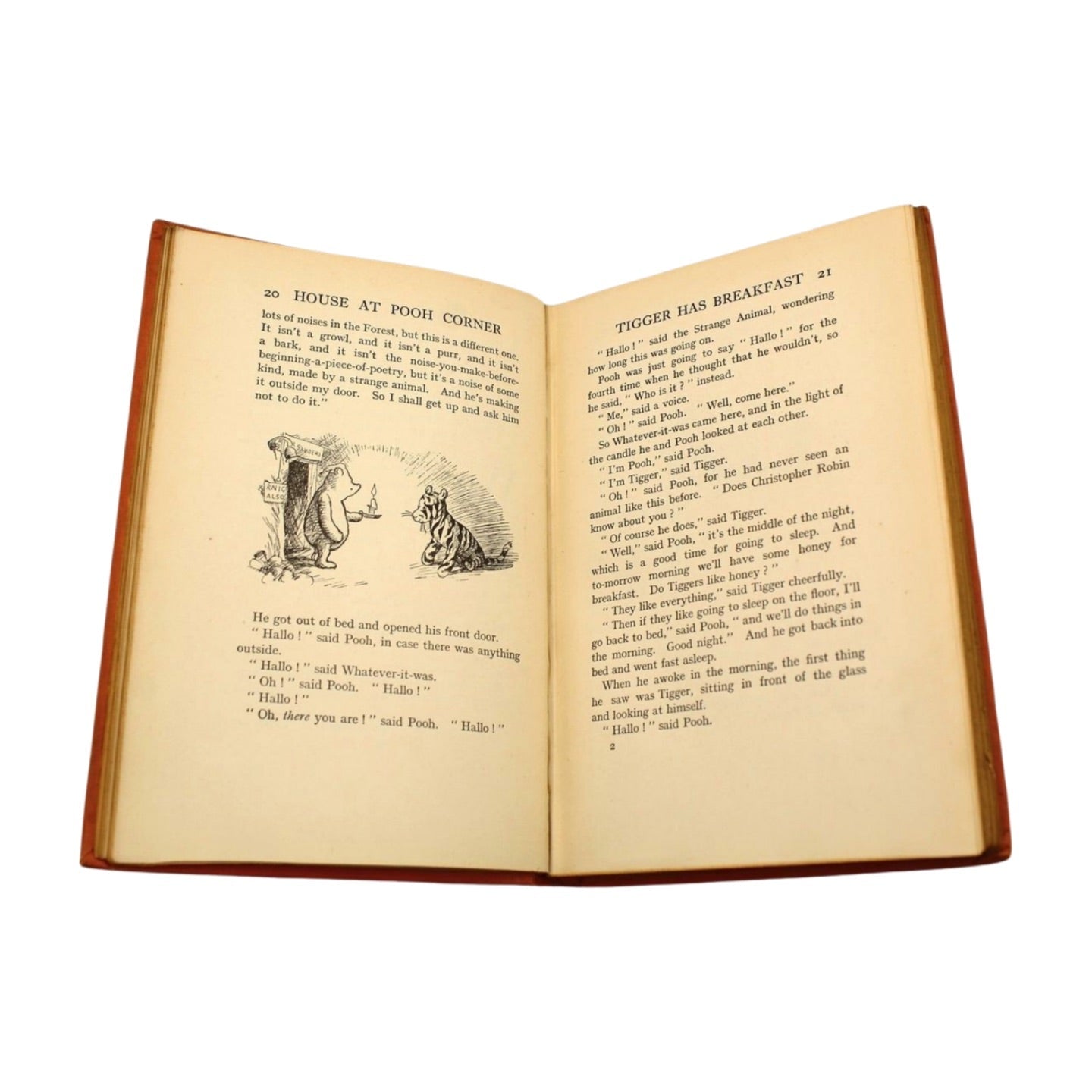
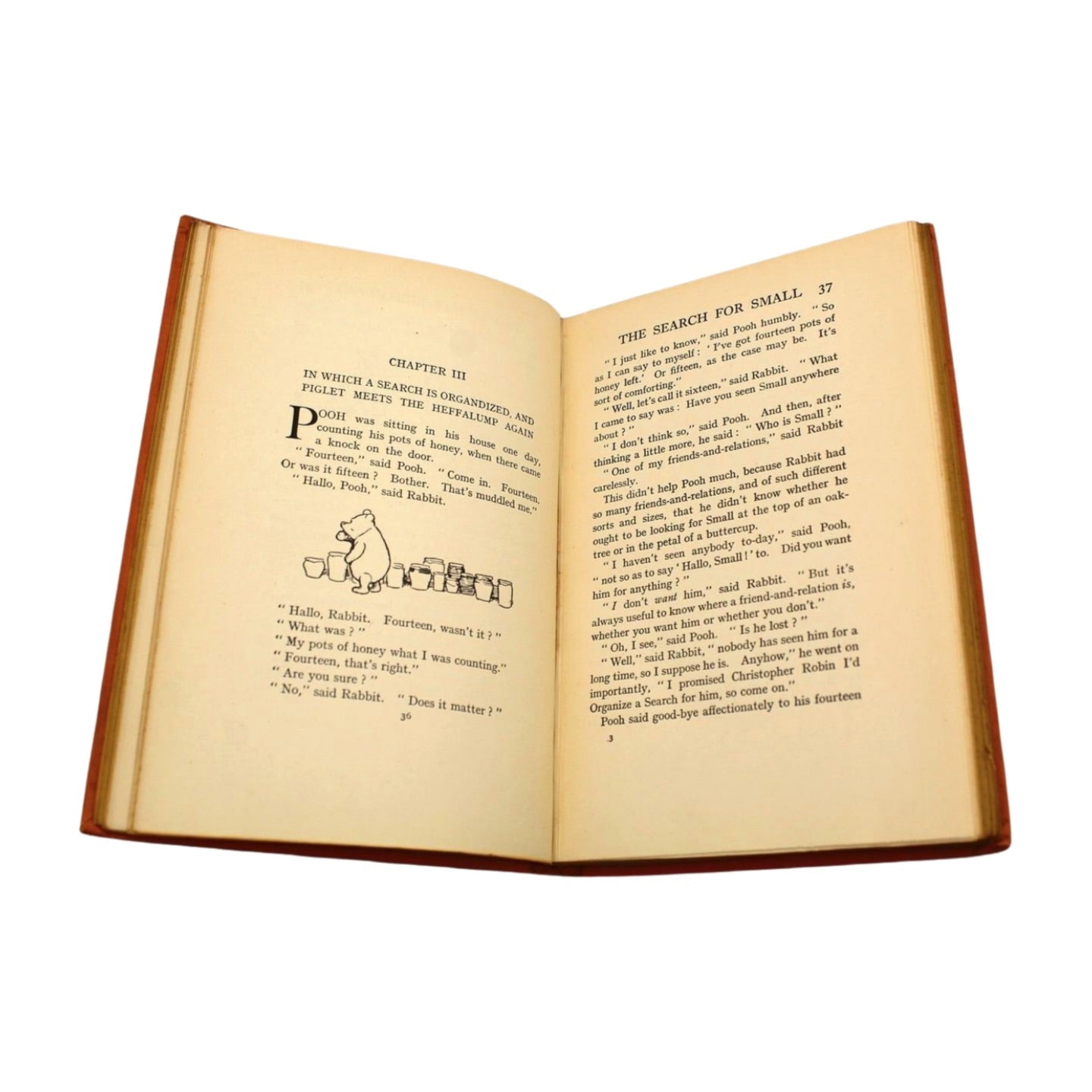
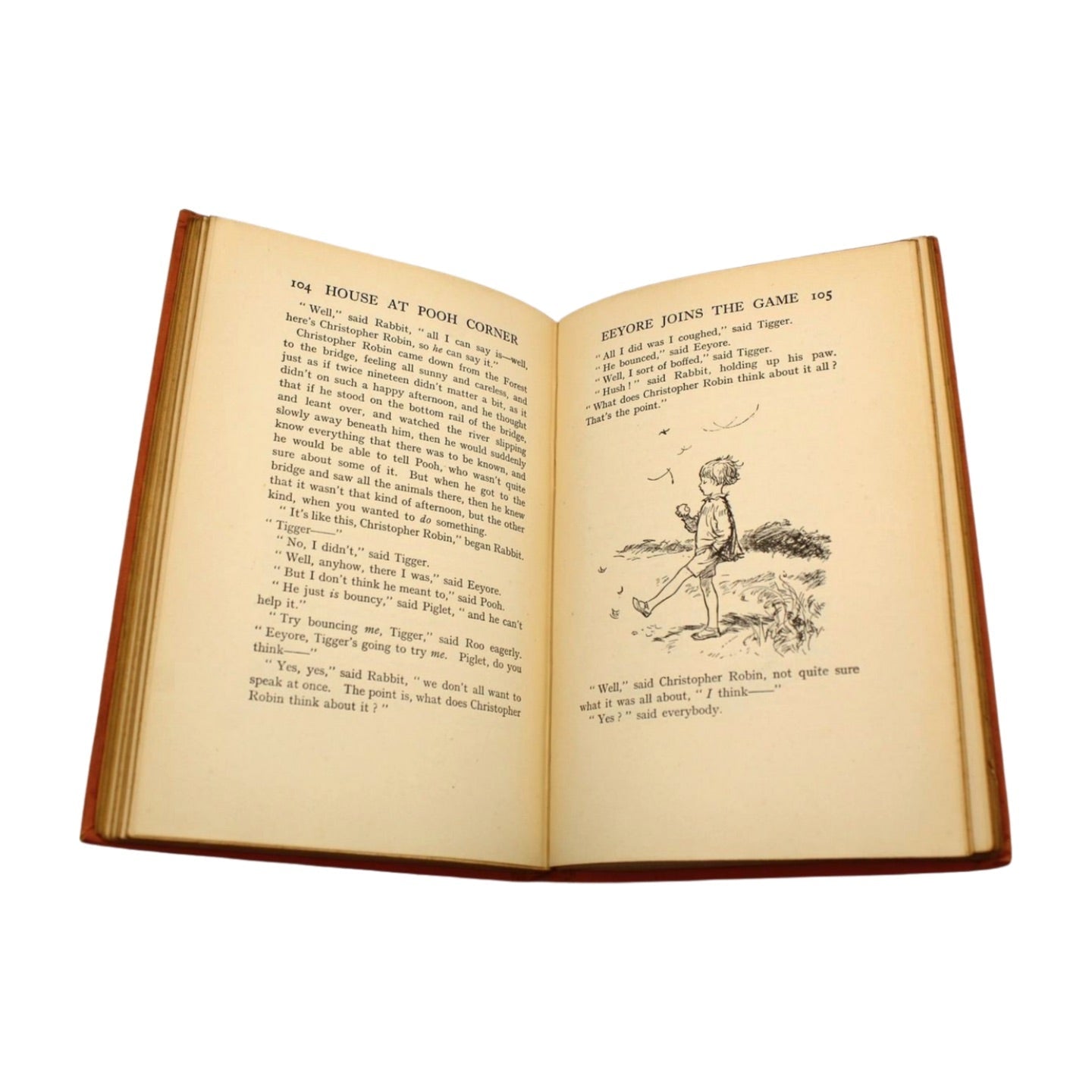
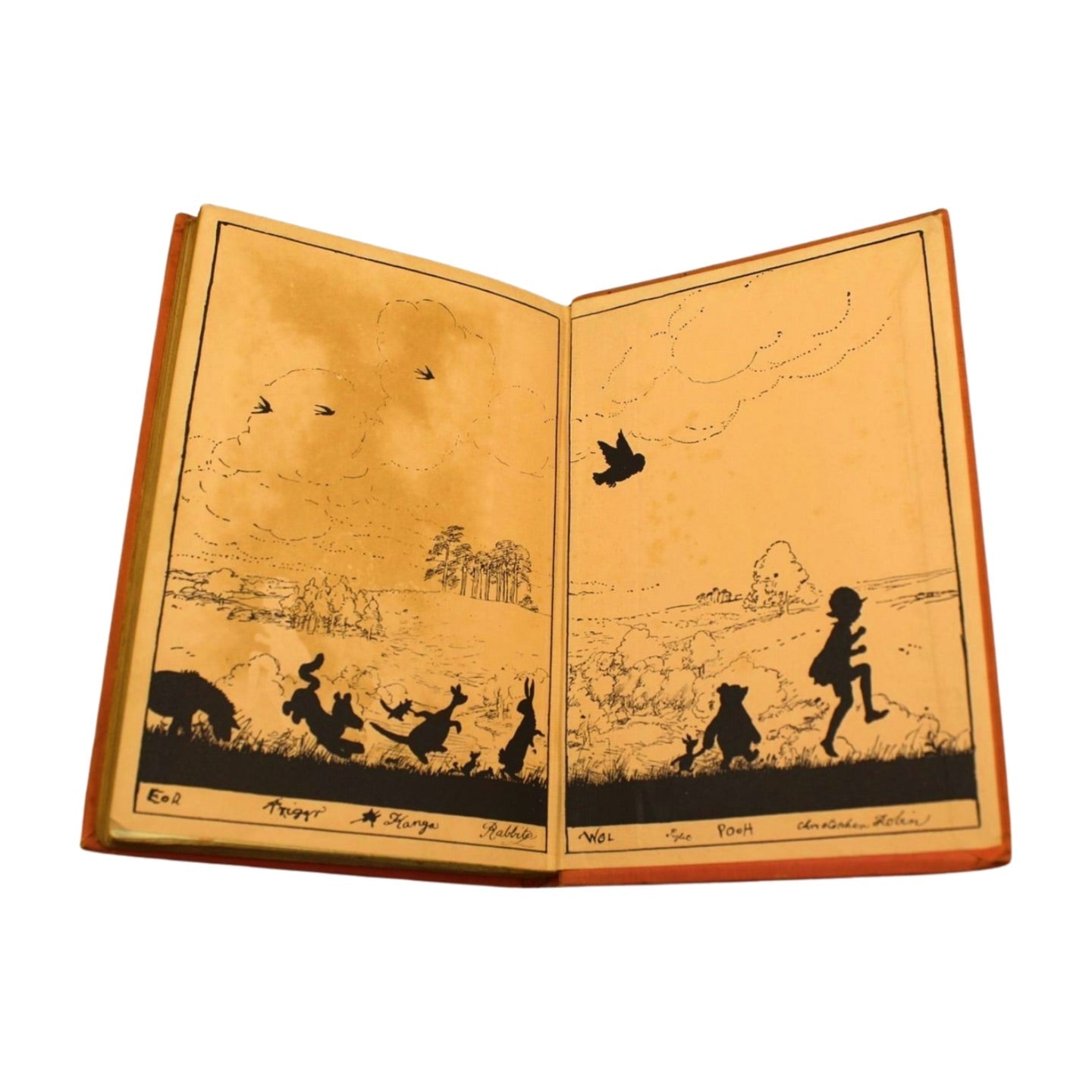
Milne, A. A. The House at Pooh Corner. London: Methuen & Co., 1928. First Edition. Illustrated by Ernest Shepard. Octavo. In the publisher's original orange boards, stamped and bordered in gilt on the front board, titled in gilt on the spine. Illustrated endpapers and illustrated throughout.
Presented is the first edition of A. A. Milne’s iconic children’s book The House at Pooh Corner. This first edition was published by Methuen & Co., in London in October of 1928. It is presented here in the publisher’s original orange boards, the front board stamped and boarded in gilt, with gilt titles on the spine, illustrated endpapers, and filled with E. H. Shepard’s charming in-text illustrations. This is a desirable and scarce edition of Milne’s fourth and final “Winnie the Pooh” story.
A. A. Milne (1882–1956) & Ernest H. Shepard (1879–1976) were the author and illustrator of the Winnie the Pooh books. Before Winnie the Pooh, Alan Alexander Milne had a thriving career as a humorist and playwright. In 1904, shortly after graduating from Cambridge, he published his first piece in Punch, and by 1906 was an assistant editor. His plays and novels, including the popular detective story The Red House Mystery, were enormously successful. Artist Ernest Howard Shepard showed aptitude for drawing from an early age. While attending the Royal Academy Schools he began submitting illustrations to magazines, and this gradually became his primary occupation. In 1906, Punch accepted his drawings for the first time and he became a regular contributor by 1914.
In 1924, A. A. Milne had written a series of children’s verses for Punch and Shepard was suggested as the illustrator. The artist’s drawings had an instant appeal, and the verses and illustrations were published the same year in book form as When We Were Very Young. When We Were Very Young is the first and the scarcest of the four Pooh books with an initial print run of 5,175 regular trade copies. It was first published in London on November 6, 1924 to immense acclaim, and the first printing sold out in one day. By the end of the year more than 53,000 copies had been printed of what The Times called "the greatest children's book since Alice" (Thwaite p. 286).
The popularity of When We Were Very Young ensured the publication of an additional three books : Winnie-the-Pooh (1926), a collection of stories based on the nursery toys belonging to Milne’s son Christopher Robin; Now We Are Six (1927) another collection of verses; and The House at Pooh Corner (1928), the final collection of Pooh stories.
After the huge success of When We Were Very Young, Milne was asked to contribute a story to the London Evening News. "The Wrong Sort of Bees," published on Christmas Eve in 1925, was based on a bedtime story that Milne had told his son Christopher. It starred Christopher's stuffed bear, which had made his first public appearance in the poem "Teddy Bear," published in Punch in 1924 and later in When We Were Very Young. The original toy was a top-of-the-range Alpha Farnell bought at Harrods for Christopher Milne's first birthday, known initially as Edward or Edward Bear, then later rechristened Winnie-the-Pooh, after a favorite bear cub at London zoo.
Winnie-the-Pooh was first published in London on October 14, 1926 in an edition of 30,000 regular trade copies. The book was an immediate success and garnered even more enthusiastic reviews than its predecessor, with one critic writing, "When the real Christopher Robin is a little old man, children will find him waiting for them. It is the child's book of the season that seems certain to stay" (Thwaite p. 317).
After the publication of When We Were Very Young, Milne began planning a second book of poetry for children. In a January 1926 letter to his brother Ken he included it as number one in a list of "things which ought to be done". He described "a book of verses (about 15 done to date) to appear in 1927 or 1928" (Thwaite p. 293). Now We Are Six was published on October 13, 1927. It took only two months for Now We Are Six to eclipse the sales records of the previous two books.
Milne began planning his final Pooh book in 1927. Three years of publicity and demanding writing schedules were taking their toll on the family, and Milne longed to return full-time to adult literature, telling his brother that "after one more Pooh book I must think of something else. In fact, it's time I tried a novel" (Thwaite p. 328). Christopher Robin was growing up, soon to leave for boarding school, and The House at Pooh Corner would be a farewell to the cherished childhood series. But first there was an introduction to be made. Milne had bought his son a stuffed tiger, "Tigger", and told Shepard that he was longing to see the illustrations for this new character, which would become one of the author's most popular creations.
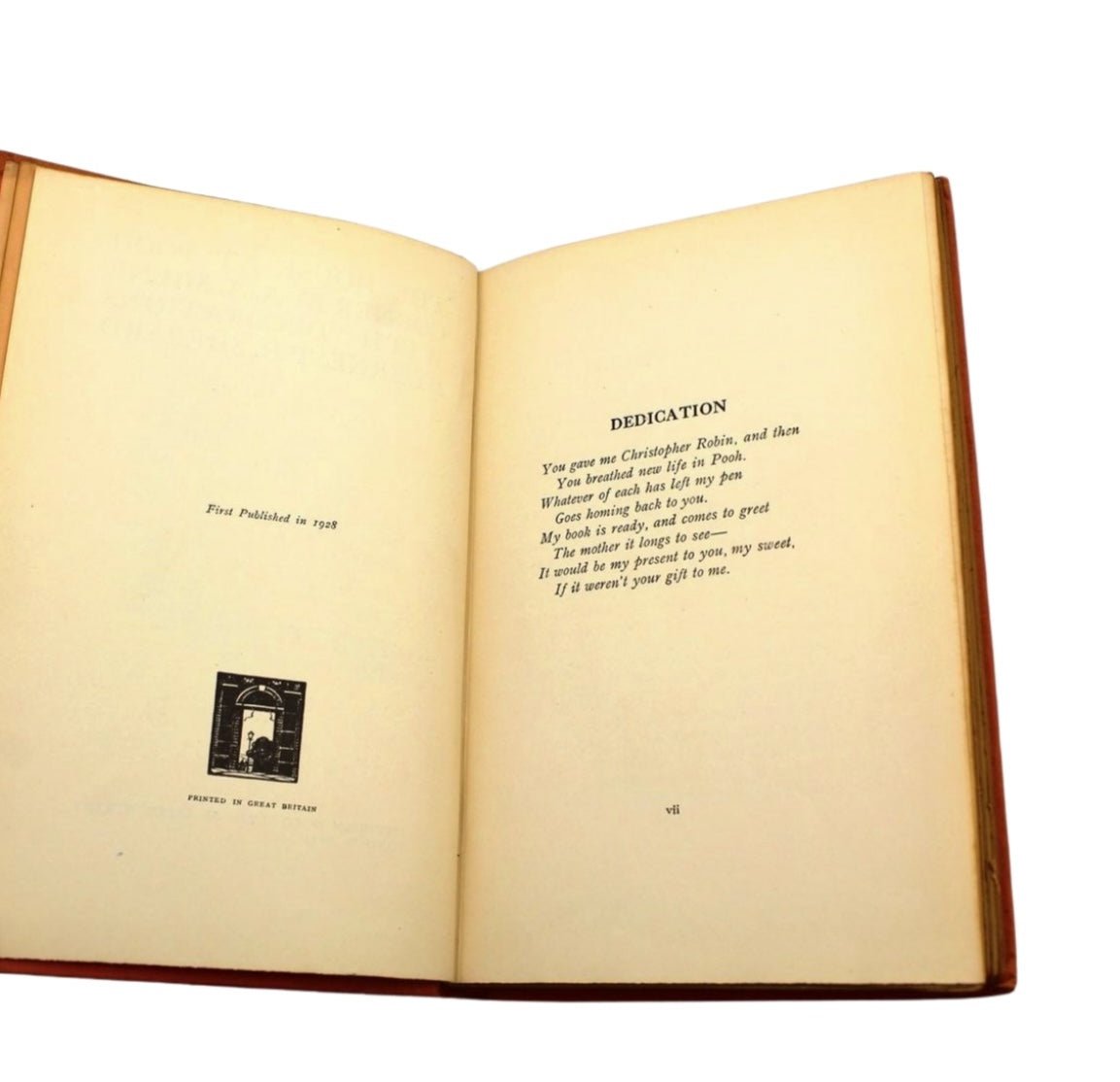
Published on October 11, 1928 in an edition of 75,000 regular trade copies, The House at Pooh Corner was received by critics with a delight, tinged with sadness for the end of the series (Thwaite p. 336). Though both men continued producing work for adults, the four Pooh books established Milne and Shepard as one of the most important partnerships in children’s literature.
CONDITION:
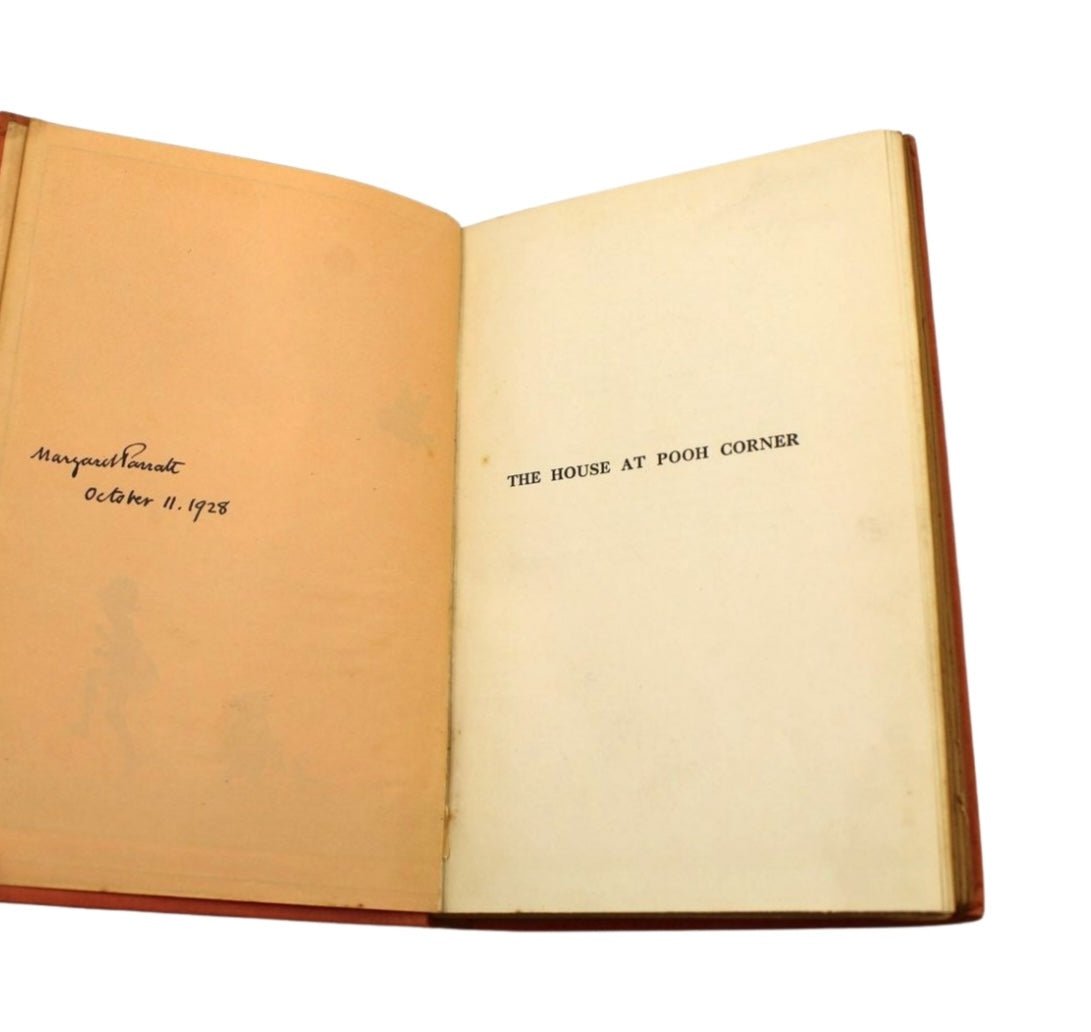
Very good+ condition overall. First edition. 8vo. In original orange boards with gilt borders and gilt stamped Christopher Robin, Pooh, and Piglet on the front, gilt titles to the spine. Light bumping to the spine and front corners. Sun fading to spine cloth, fading of gilt. Surface stains to cloth. Original charming illustrated endpapers, toned. Past owner's name and date in ink on flyleaf. Some pages splitting from board visible in a few places internally. Clean interior pages, with light toning close to inner hinges. Illustrated by E. H. Shepard throughout.
Dimensions: 7 7/8" H x 5 1/4" W x 11/16" D.
Accompanied by our company's letter of authenticity.
Pickup available at Colorado
Usually ready in 4 hours
The House at Pooh Corner by A. A. Milne, Illustrated by Ernest H. Shepard, First Edition, in Original Boards, 1928
Colorado
1 Lake Avenue
Colorado Springs CO 80906
United States
Choose options
Frequently Asked Questions
FAQs
Yes, all of our Antiques are certified authentic. Every antique comes with a signed Letter of Authenticity that details the item’s history, its current condition including any conservation, binding, or framing work, and the item’s provenance. The Letters of Authenticity are priced valuations by our authentication specialists, who assure that items are original and unconditionally guaranteed as genuine for life.
We pack and ship your items from our gallery in Colorado Springs. You may also choose to come pick up your order. Antique items are carefully packed and insured during shipping. The shipping price will be calculated at checkout.
We acquire from a variety of trusted sources all over the world, but mostly through auctions and private collections within the United States. All provenance information will be listed on the Letter of
Authenticity accompanying your purchase.