
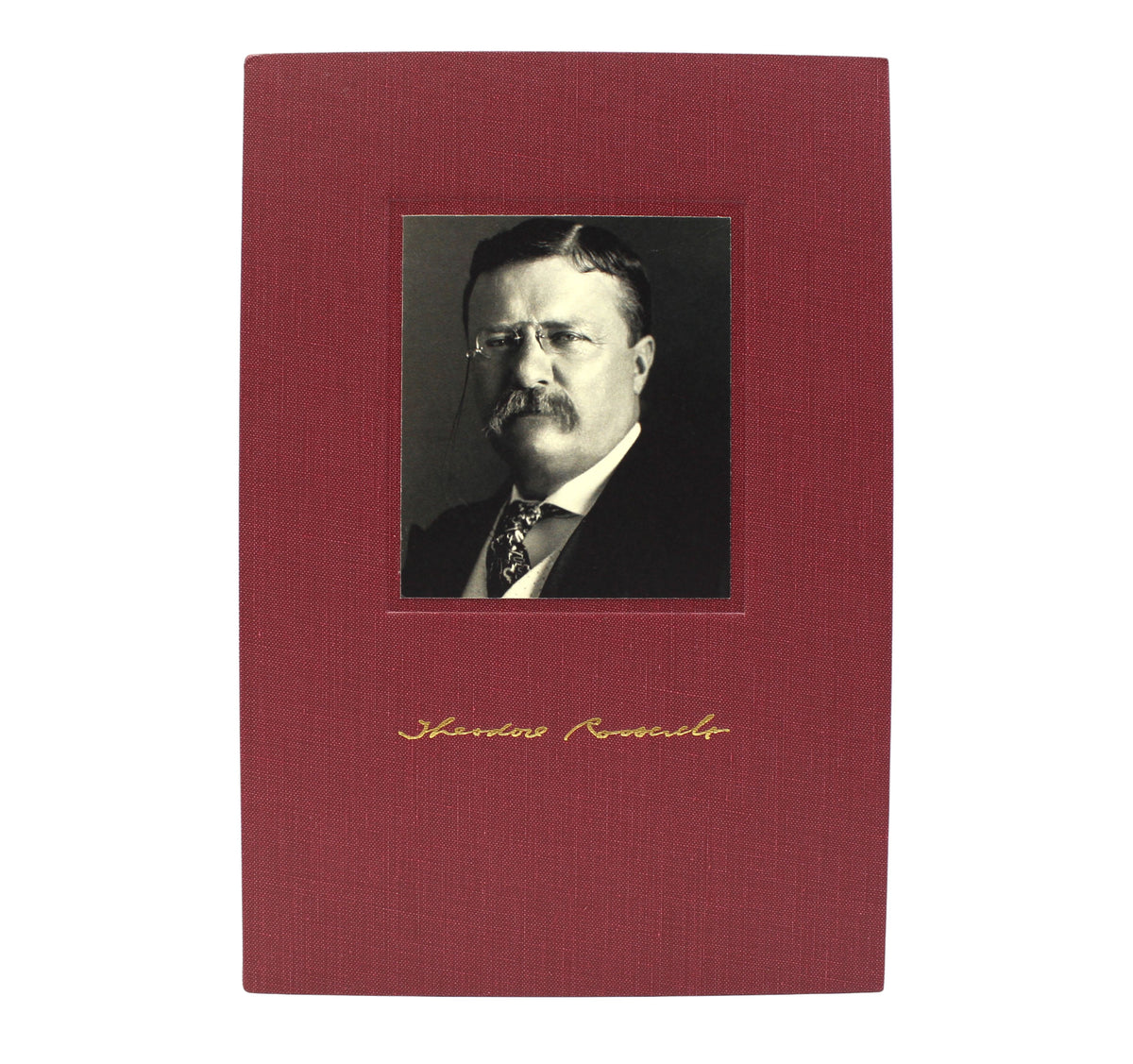

The Foes of Our Own Household by Theodore Roosevelt, First Edition, 1917
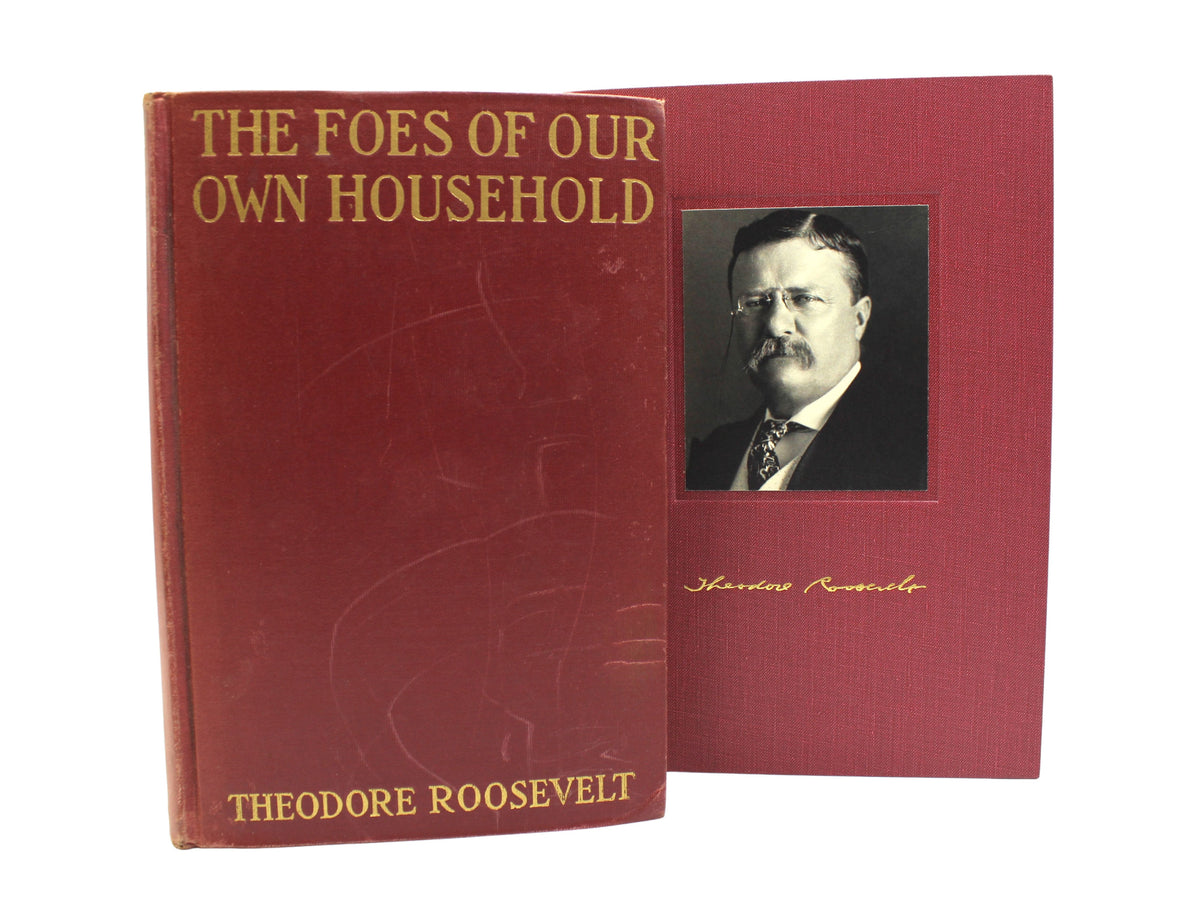
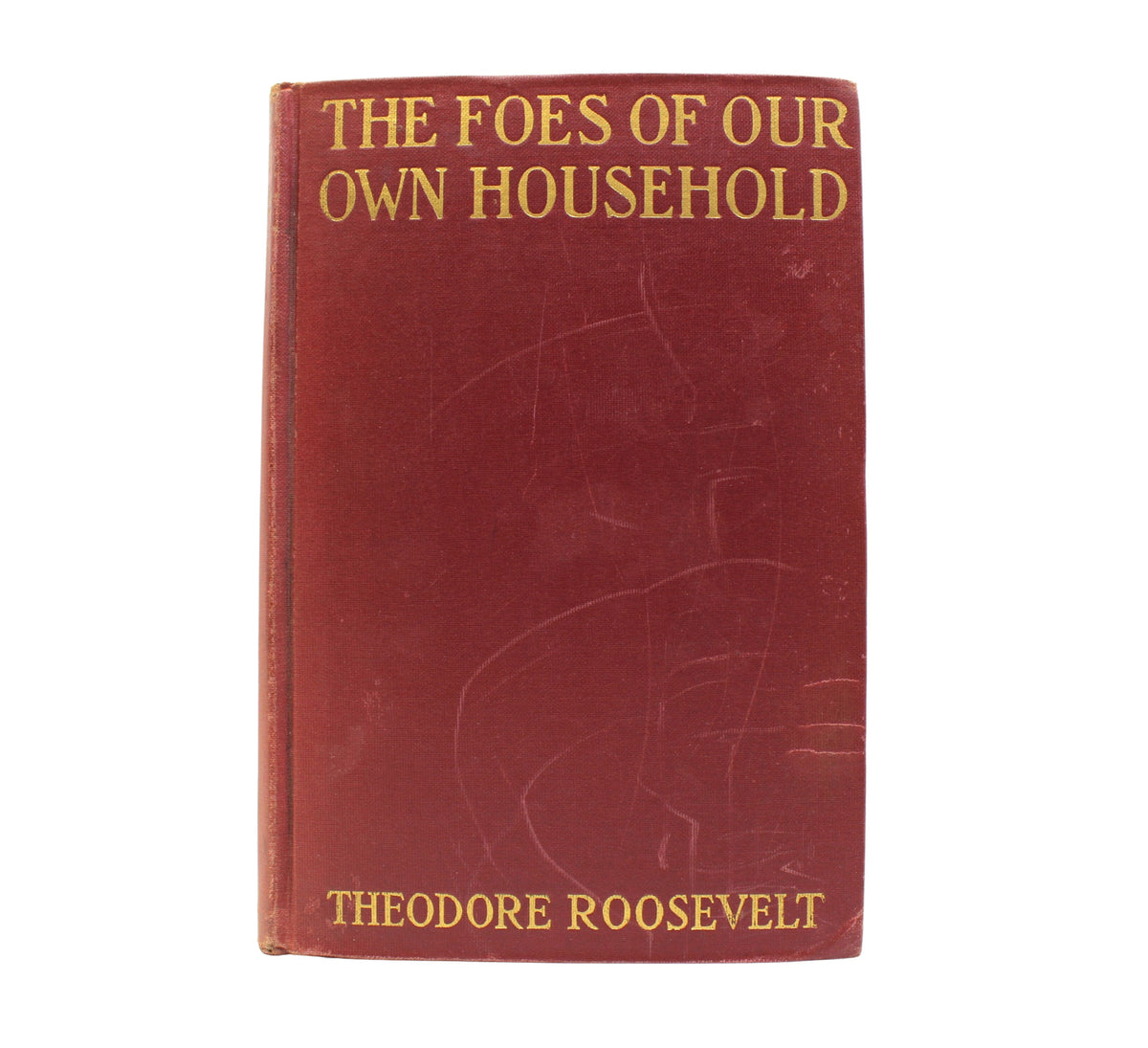
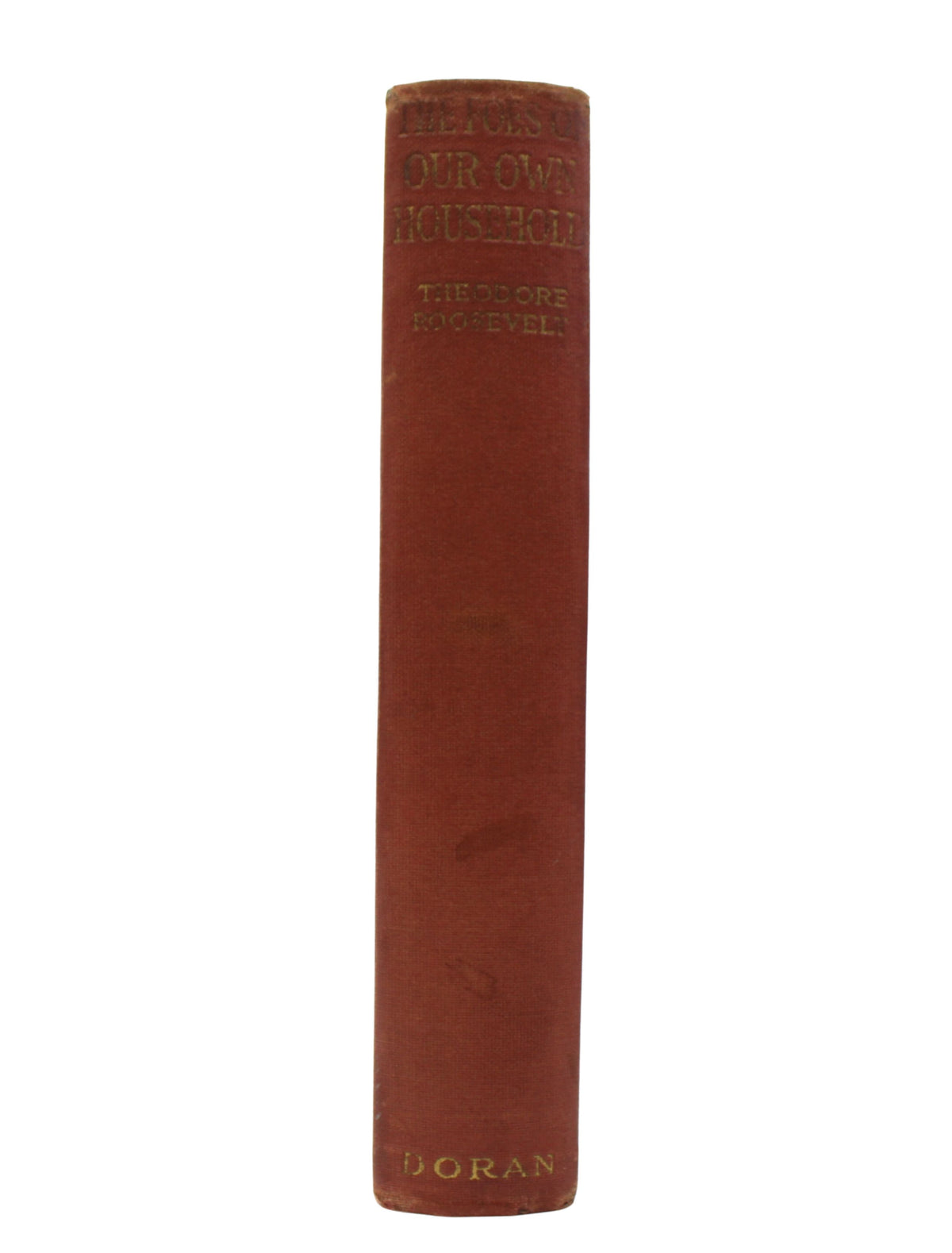
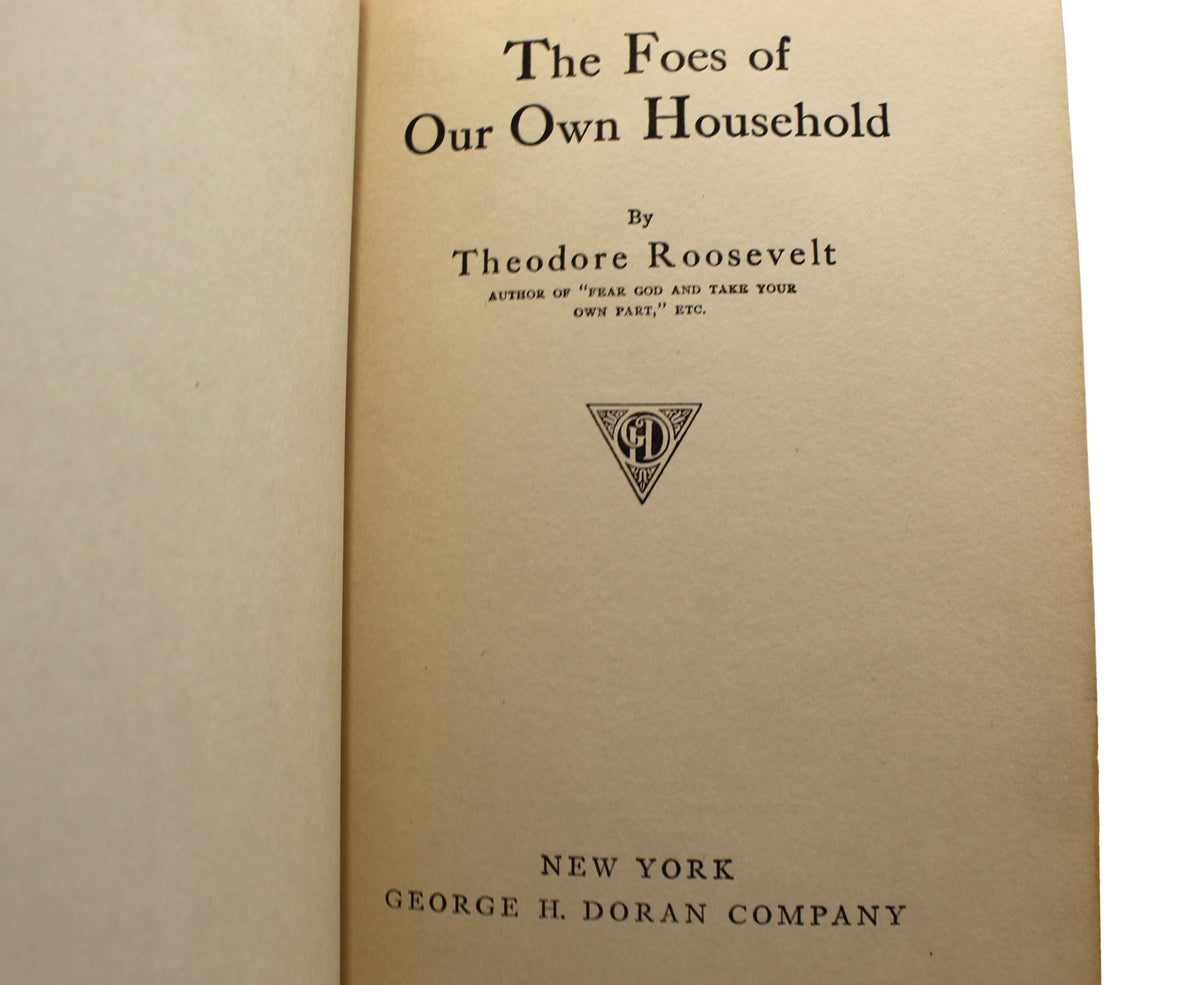
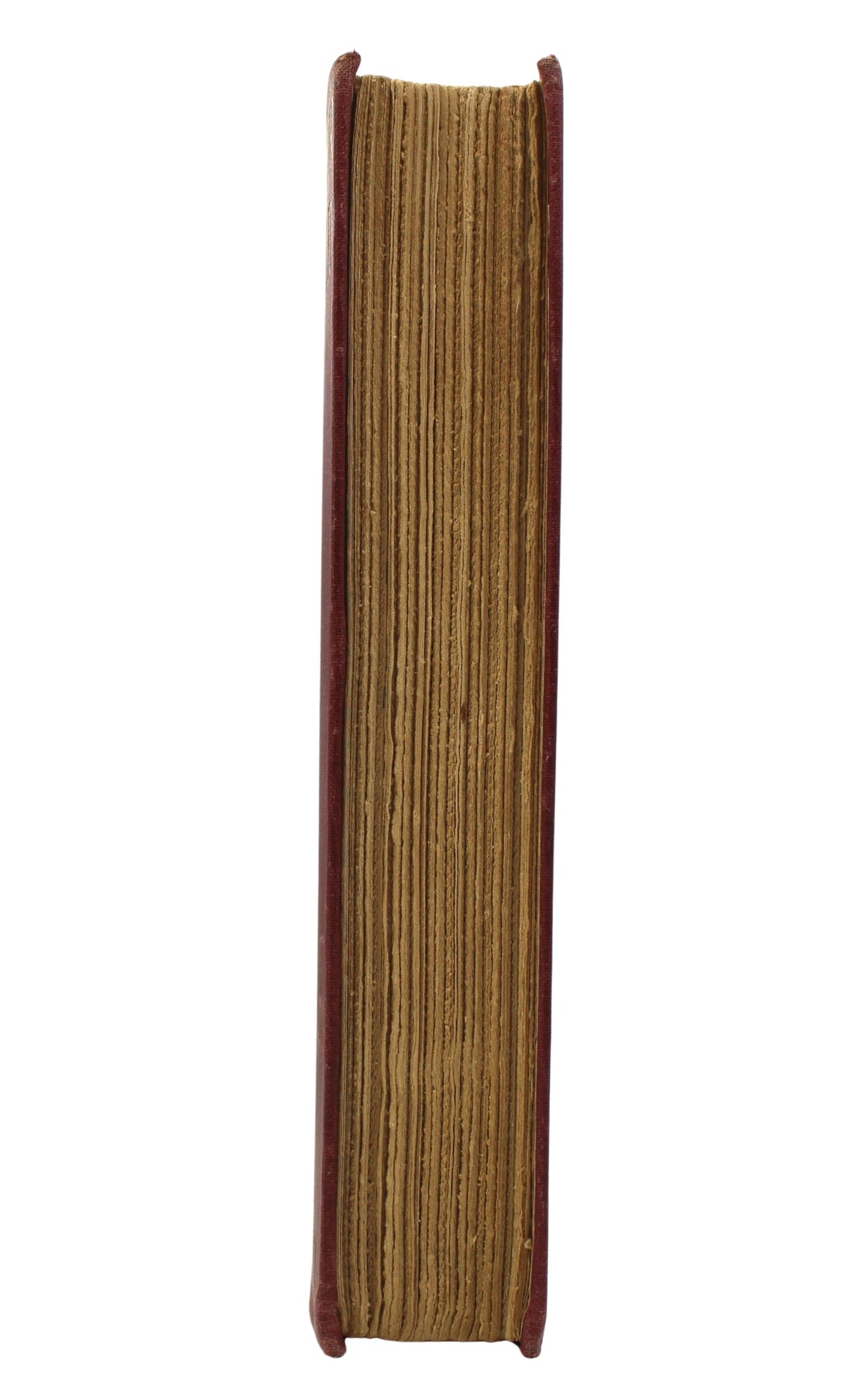
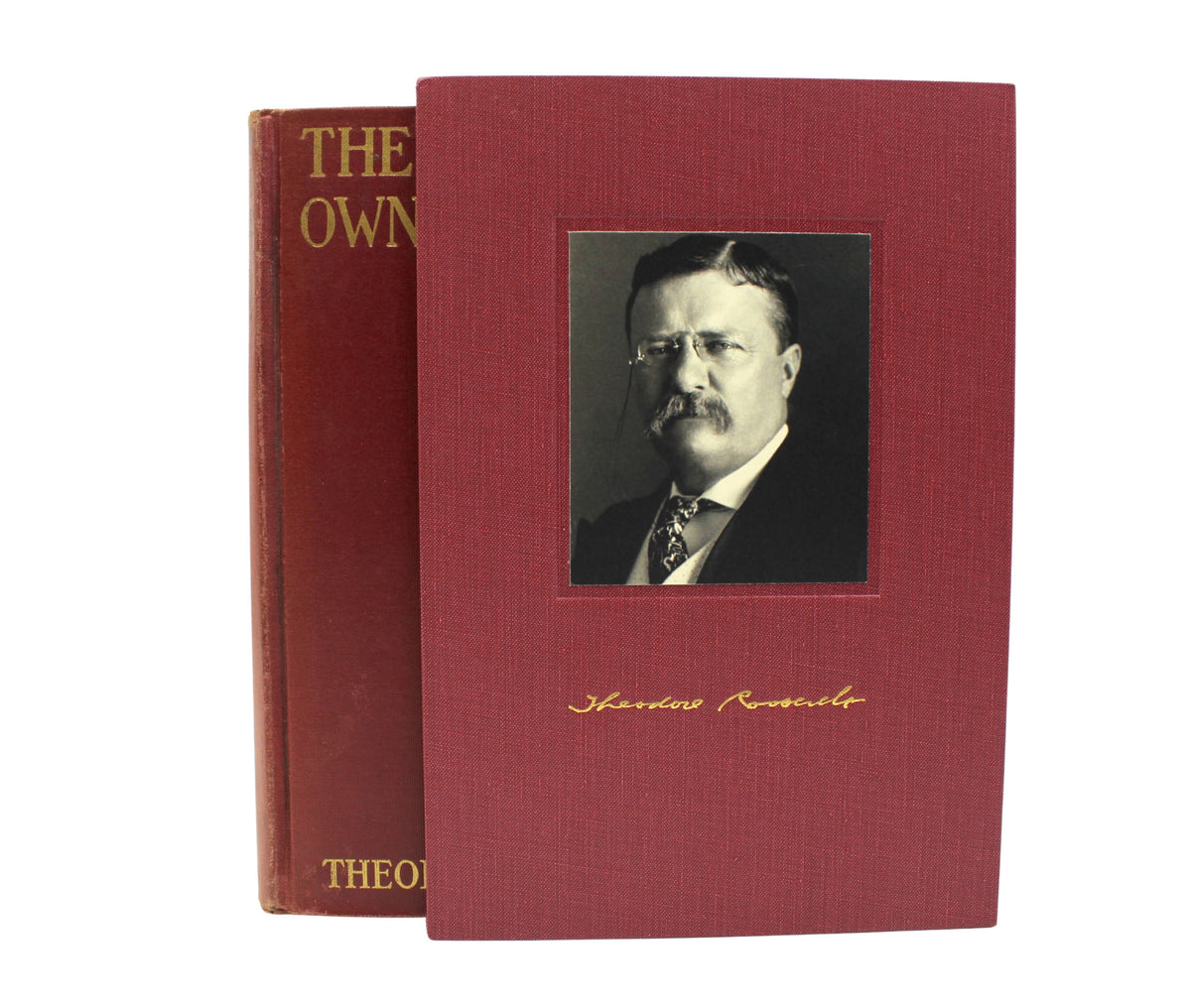
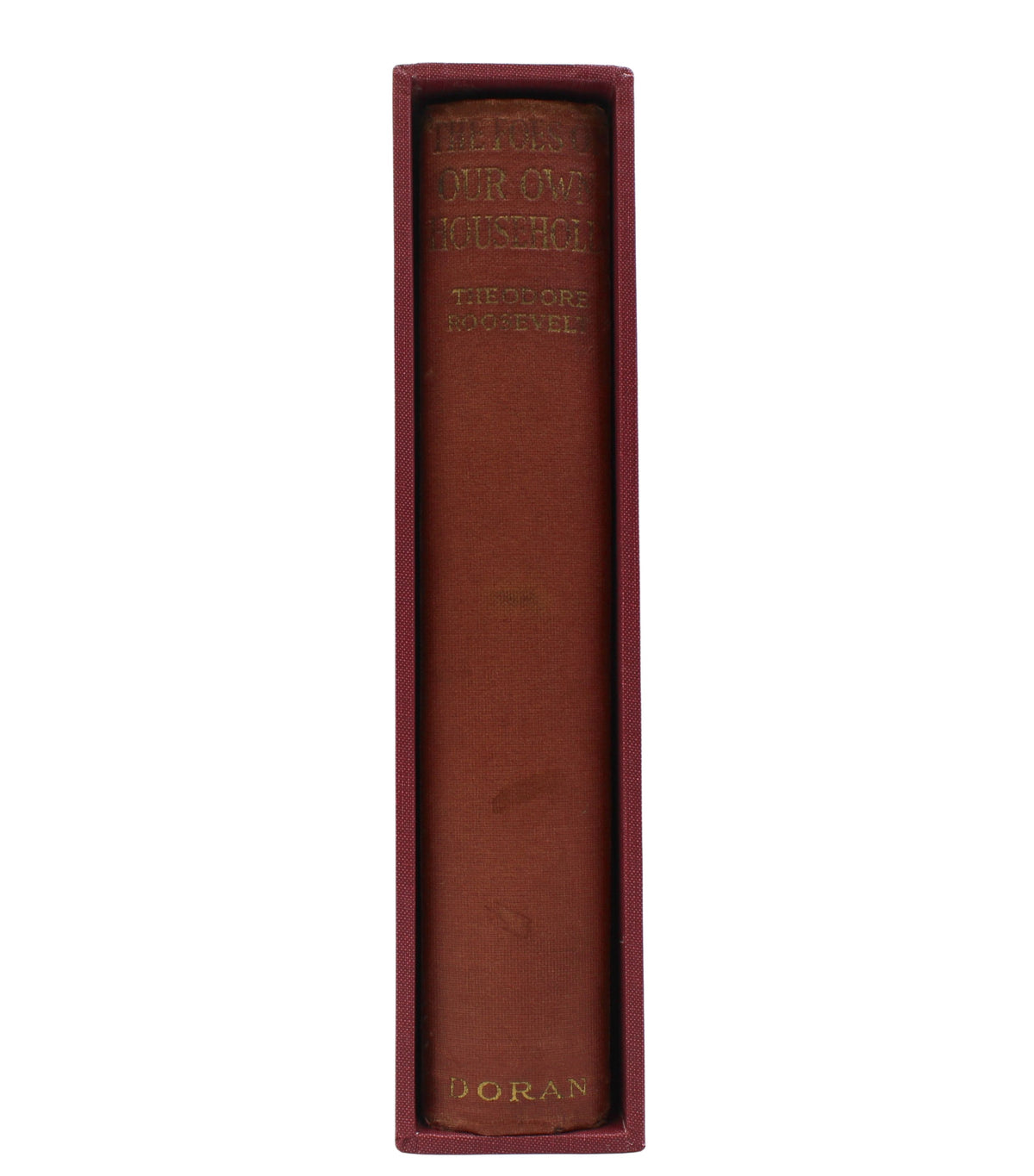
Roosevelt, Theodore. The Foes of Our Own Household. New York: George H. Doran Company, 1917. First edition, first issue. Octavo. In the publisher's red cloth boards, with gilt titles to front and spine. New joints and linings. Lacking the original dust jacket, but with a new archival slipcase.
Presented is a first edition printing of The Foes of Our Own Household by Theodore Roosevelt. The book was published in 1917 by George H. Doran Company, during the United States’ entry into the First World War. It is presented here in its original red cloth boards with gilt titles to the front and spine, new joints and linings. Lacking the original dust jacket, but with a new archival slipcase.
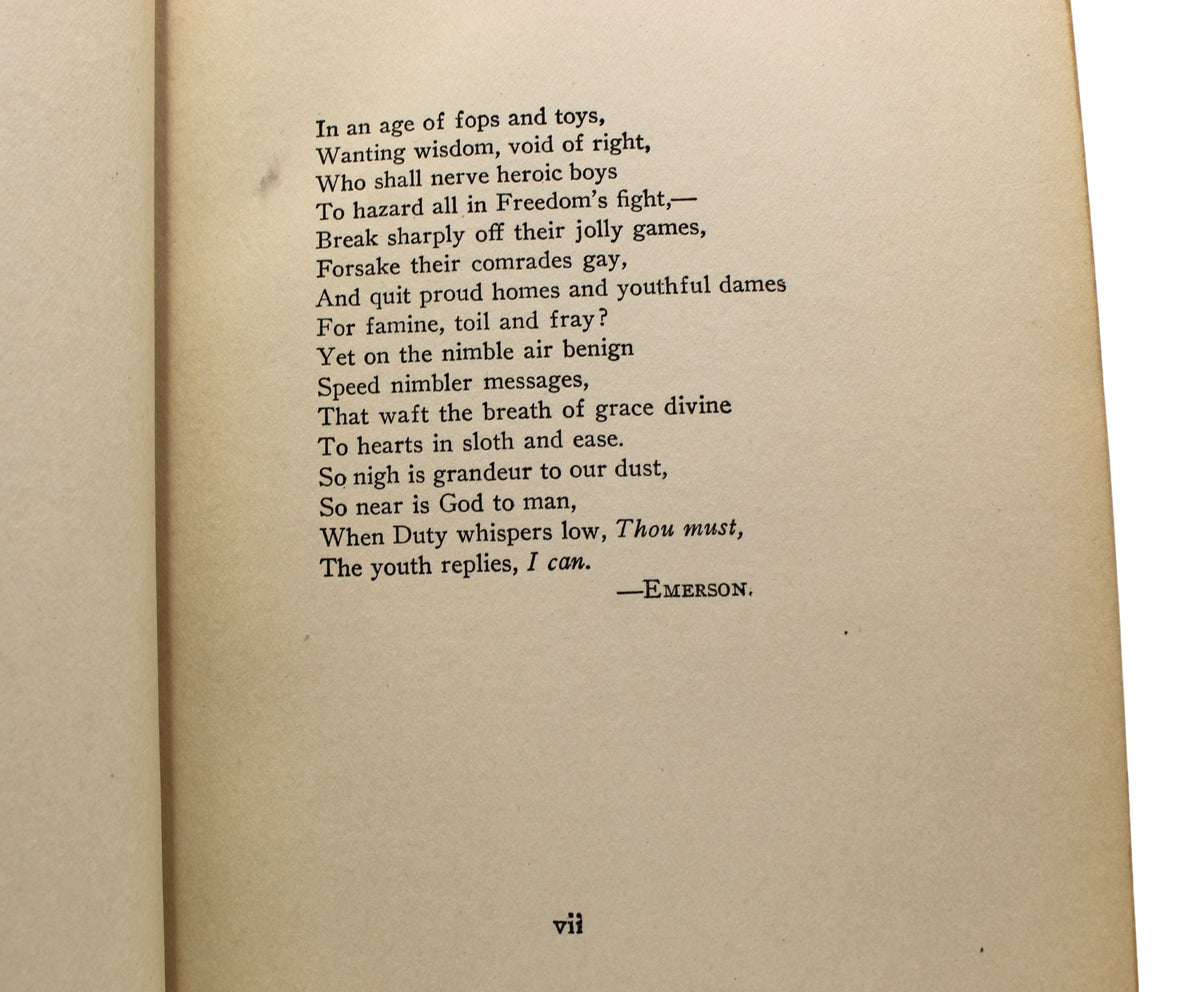
A collection of essays on American military preparedness, industrial capacity, civic responsibility, and national loyalty, The Foes of Our Own Household presents Roosevelt’s forceful argument that the United States’ greatest vulnerabilities lay not only in its external enemies but also in domestic complacency, political division, and indifference to the demands of war. Published in the spring of 1917, following the United States’ declaration of war on April 6, the work reflects Roosevelt’s longstanding advocacy of military readiness and his conviction that American citizenship entailed active obligations to the nation. He opens the volume with an excerpt from Ralph Waldo Emerson’s “Voluntaries,” an 1863 poem honoring Union soldiers during the Civil War, establishing a historical parallel between the preservation of the Union and the struggle against German militarism.
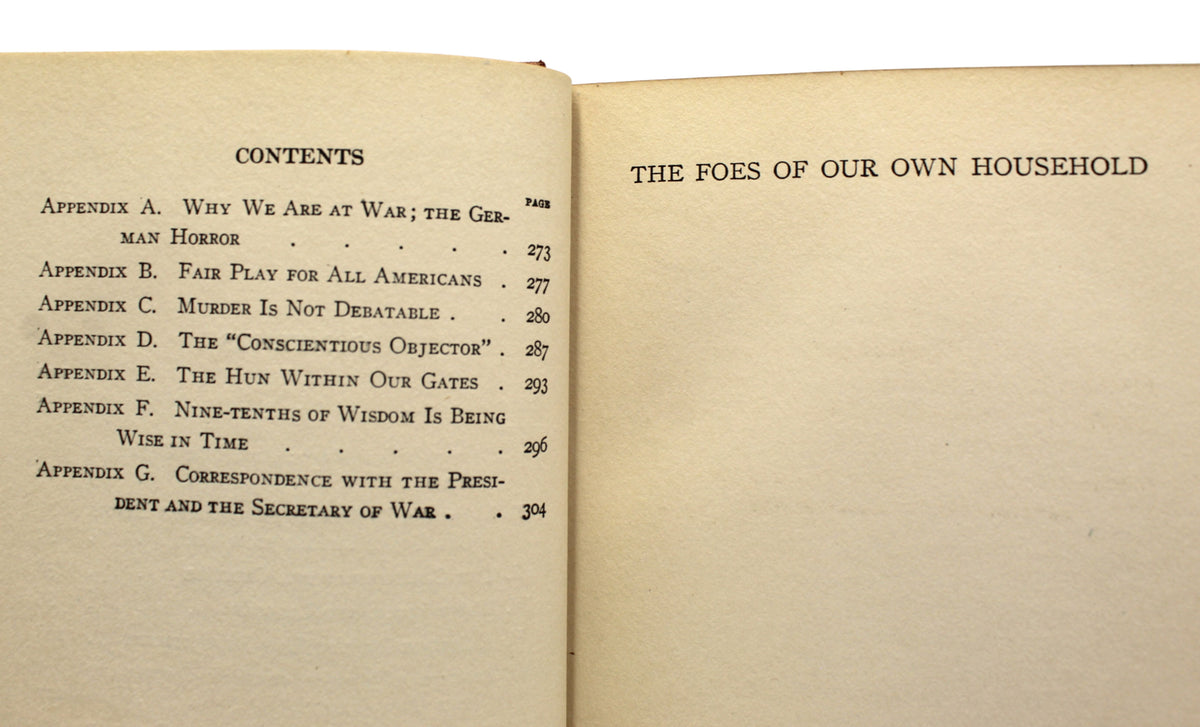
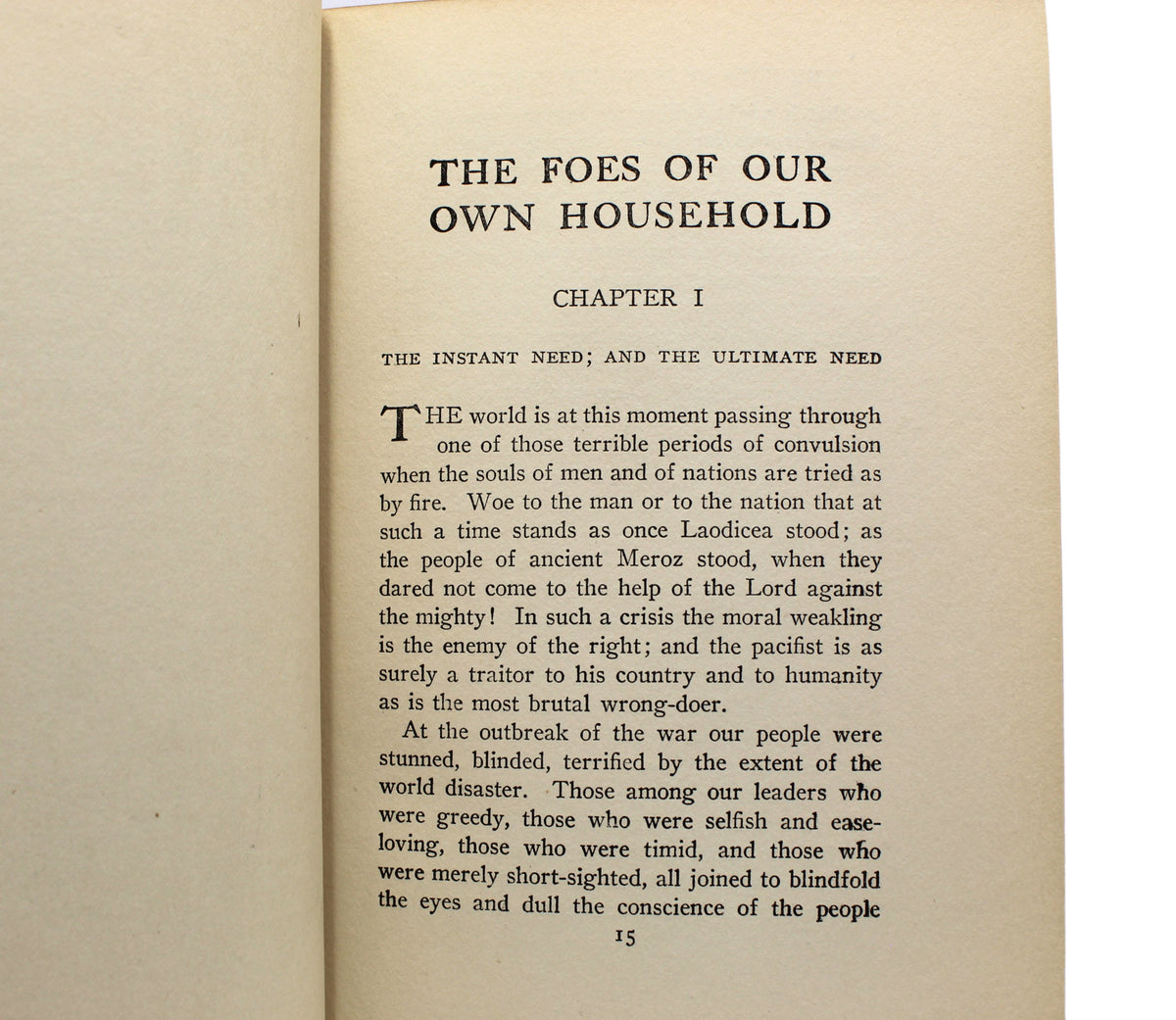
In his foreword, Roosevelt condemns those who questioned the necessity of American intervention or expressed sympathy for Germany. “The man who still asks ‘why we are at war,’ or apologizes in any way for Germany, should look to his own soul; he is neither a patriot nor a true American, nor a lover of mankind; and the foes of his own household are the folly and the cowardice and the cold selfishness of his own heart.” He insists that Americans must regard Germany’s actions with horror while holding in contempt those who offer the enemy “aid and comfort,” whether by openly attacking the United States, defending Germany, criticizing its allies, discouraging vigorous prosecution of the war, or demanding peace when, in Roosevelt’s view, peace would be unjustified.
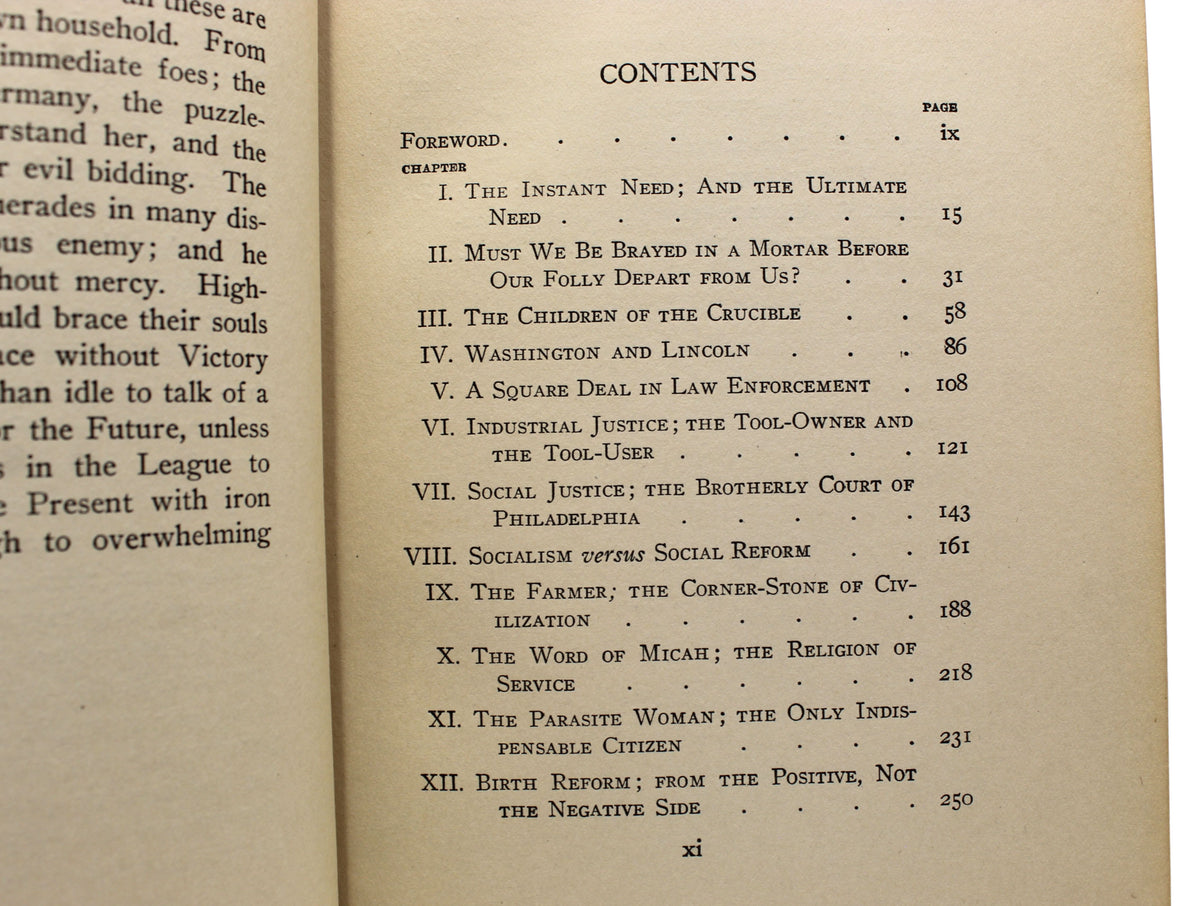
Roosevelt grounds his conception of American patriotism in the examples of George Washington and Abraham Lincoln, arguing that historical reverence alone is insufficient without a willingness to apply their principles to contemporary challenges. “Lip loyalty to Washington and Lincoln costs nothing and is worth just exactly what it costs. What counts is the application of their principles to the conditions of today.” For Roosevelt, this practical patriotism demanded military preparedness, universal military training, and a willingness among citizens to accept personal sacrifices in service of the nation. He directs particular criticism toward pacifists, pro-German sympathizers, and those who remained absorbed in their own comforts while others bore the burdens of war.
The volume also connects the prosecution of the war with the reform of domestic institutions. Roosevelt argues that a sound foreign policy cannot be sustained without addressing the social and economic conditions of the nation, declaring, “We cannot permanently shape our course right on any international issue unless we are sound on the domestic issues.” His discussion encompasses labor, land ownership, and agricultural reform, with particular attention to the condition of the American farmer. He calls for “radical changes” to restore agriculture to “a healthy basis,” describing it as “the oldest and most essential of all occupations,” and as “the foundation of all others, the occupation of the tiller of the soil, of the man who by his own labor raises the raw material of food and clothing, without which the whole fabric of the most gorgeous civilization will topple in a week.” These concerns reveal a broader vision of preparedness that encompasses economic stability, productive labor, and a more equitable domestic order.
Roosevelt concludes by linking American security to the pursuit of justice at home and abroad. “I believe in that ardent patriotism which will make a nation true to itself by making it secure justice for all within its own borders, and then so far as may be, aid in every way in securing just and fair treatment for all the nations of mankind.” He closes with confidence in the capacity of the American people to meet the demands of their historical moment: “I believe that the people of the United States have in them the power to rise to the level of their needs, their opportunities and their obligations.”
The book received a favorable assessment in The New York Times Book Review. Published October 7, 1917, the reviewer described the volume as “[a] compact presentation of some of the evils in our national life for whose eradication the best thoughts and energies of our people will be necessary.” The review praised the opening chapters’ “impassioned appeal to all Americans, men, women, and children, to take up each his or her own share of the burden of the war and do whatever work is possible with zeal and efficiency,” while noting Roosevelt’s indignation toward those “whether Senators, Congressman, editors, or professed humanitarians” who continued to assist or champion Germany’s cause.
CONDITION:
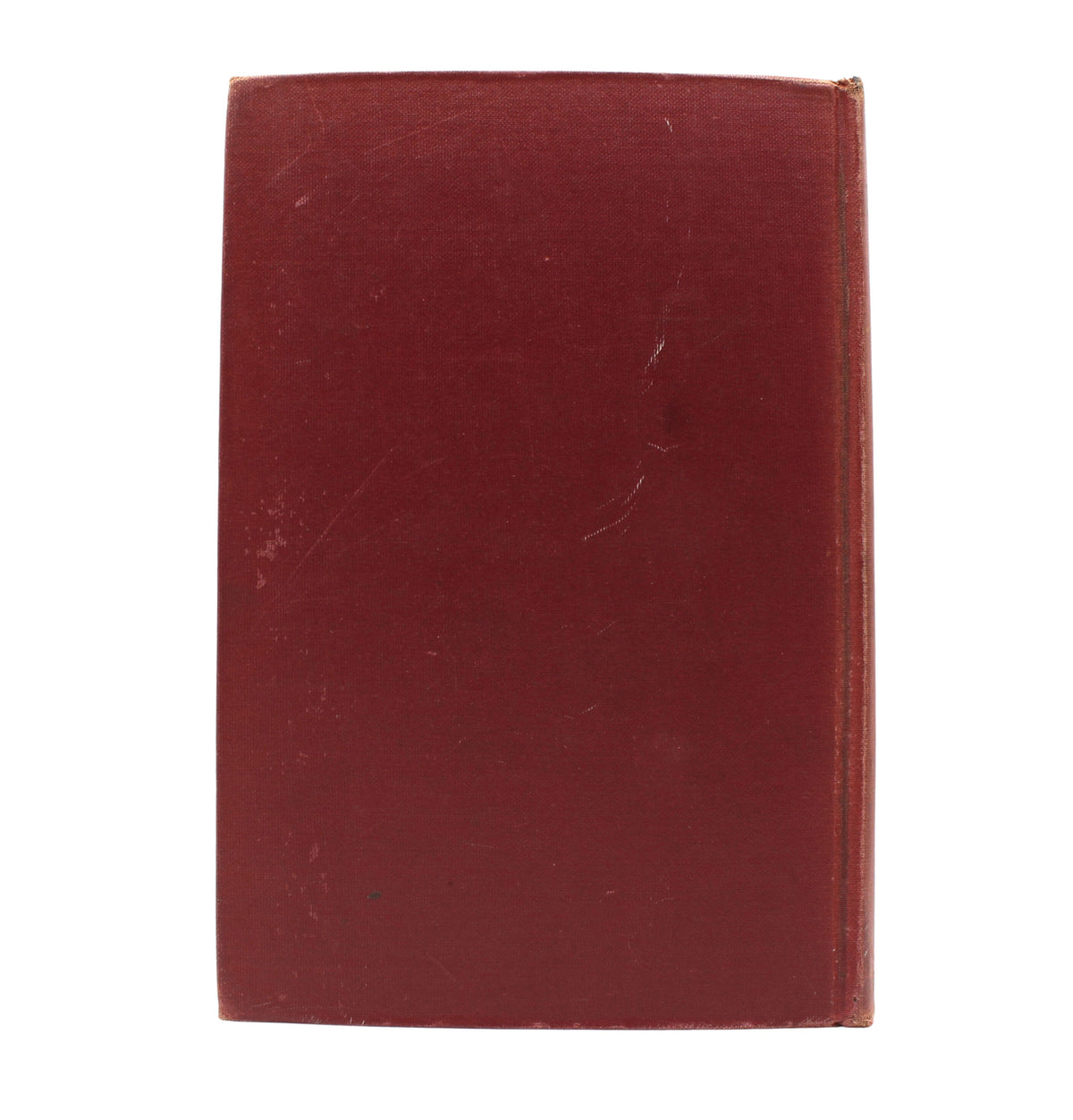
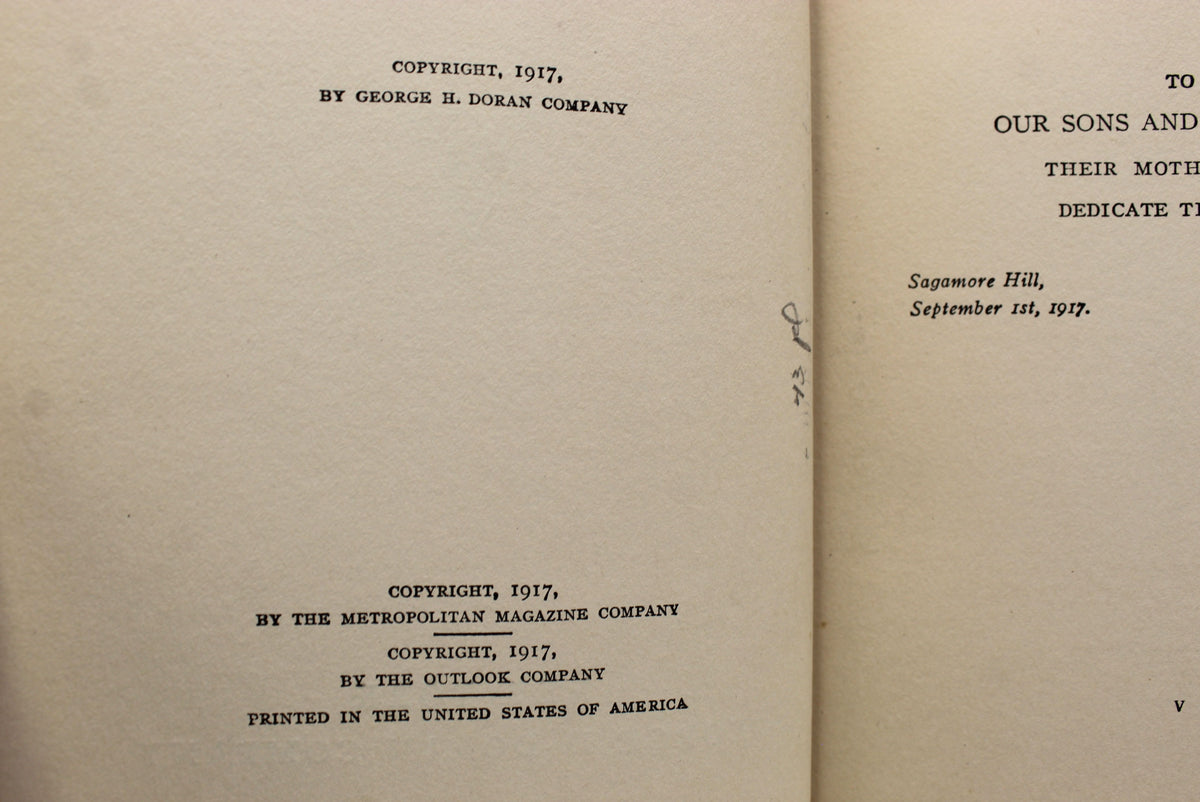
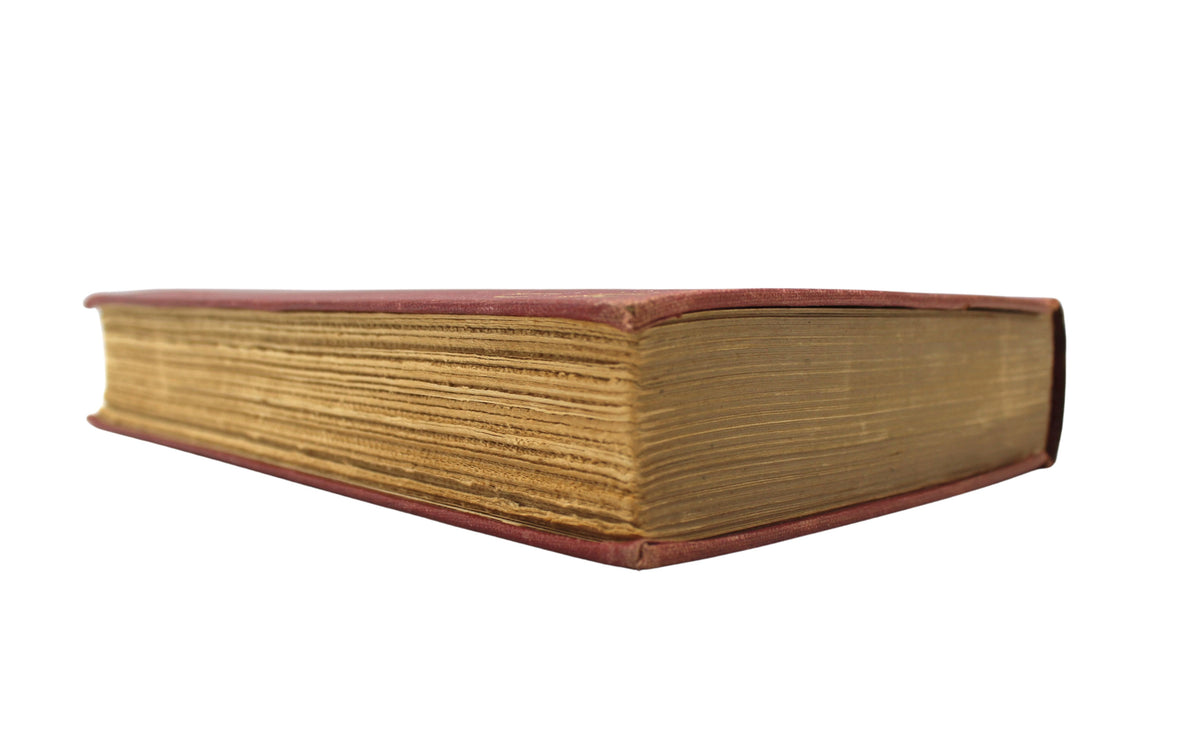
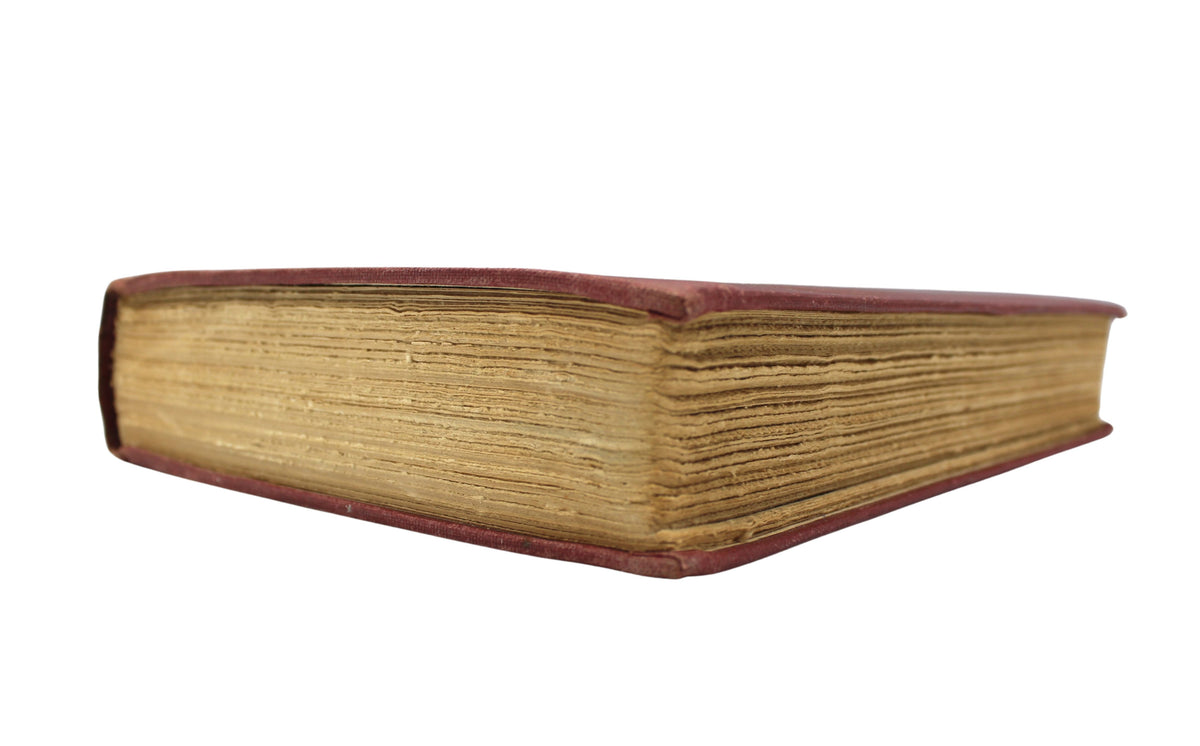
Very good+ condition. First edition, first printing, with gilt titles to spine and monogram in center of triangle measuring 3/8". Octavo. Original red cloth boards, with gilt titles to front and spine. Scuffs and scratches to red cloth, red cloth vibrant and gilt vibrant on front, sunning and gilt titles faded on spine, bumping of corners, wear to top of spine. New joints and linings. Deckled foreedge. Interior pages are very clean, with light toning. Pencil inscription in margin of copyright page. Lacking the original dust jacket, but with a new archival red slipcase.
Accompanied by our company’s letter of authenticity.
Pickup available at Colorado
Usually ready in 4 hours
The Foes of Our Own Household by Theodore Roosevelt, First Edition, 1917
Colorado
1 Lake Avenue
Colorado Springs CO 80906
United States
Choose options
Frequently Asked Questions
FAQs
Yes, all of our Antiques are certified authentic. Every antique comes with a signed Letter of Authenticity that details the item’s history, its current condition including any conservation, binding, or framing work, and the item’s provenance. The Letters of Authenticity are priced valuations by our authentication specialists, who assure that items are original and unconditionally guaranteed as genuine for life.
We pack and ship your items from our gallery in Colorado Springs. You may also choose to come pick up your order. Antique items are carefully packed and insured during shipping. The shipping price will be calculated at checkout.
We acquire from a variety of trusted sources all over the world, but mostly through auctions and private collections within the United States. All provenance information will be listed on the Letter of
Authenticity accompanying your purchase.