




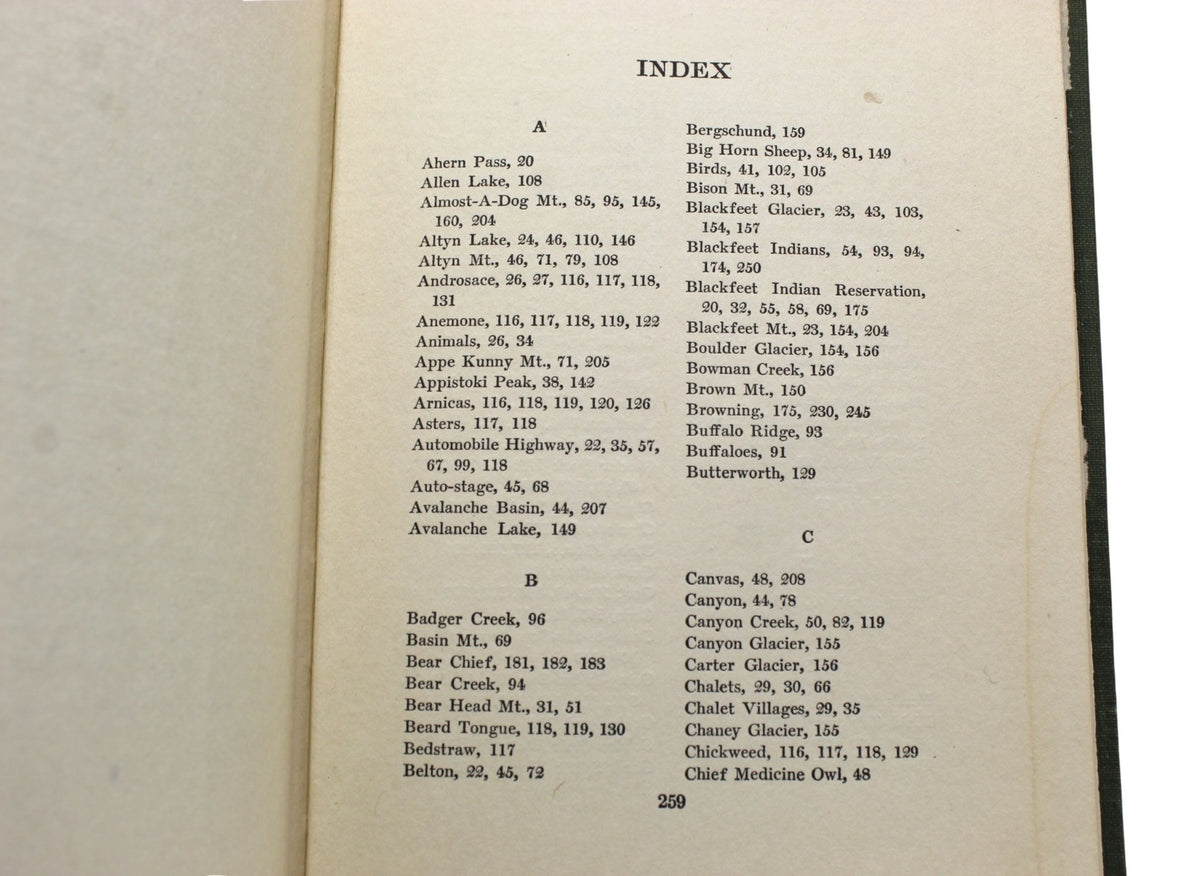
Glacier National Park: Its Trails and Treasures by Mathilde Edith Holtz and Katharine Isabel Bemis, 1917
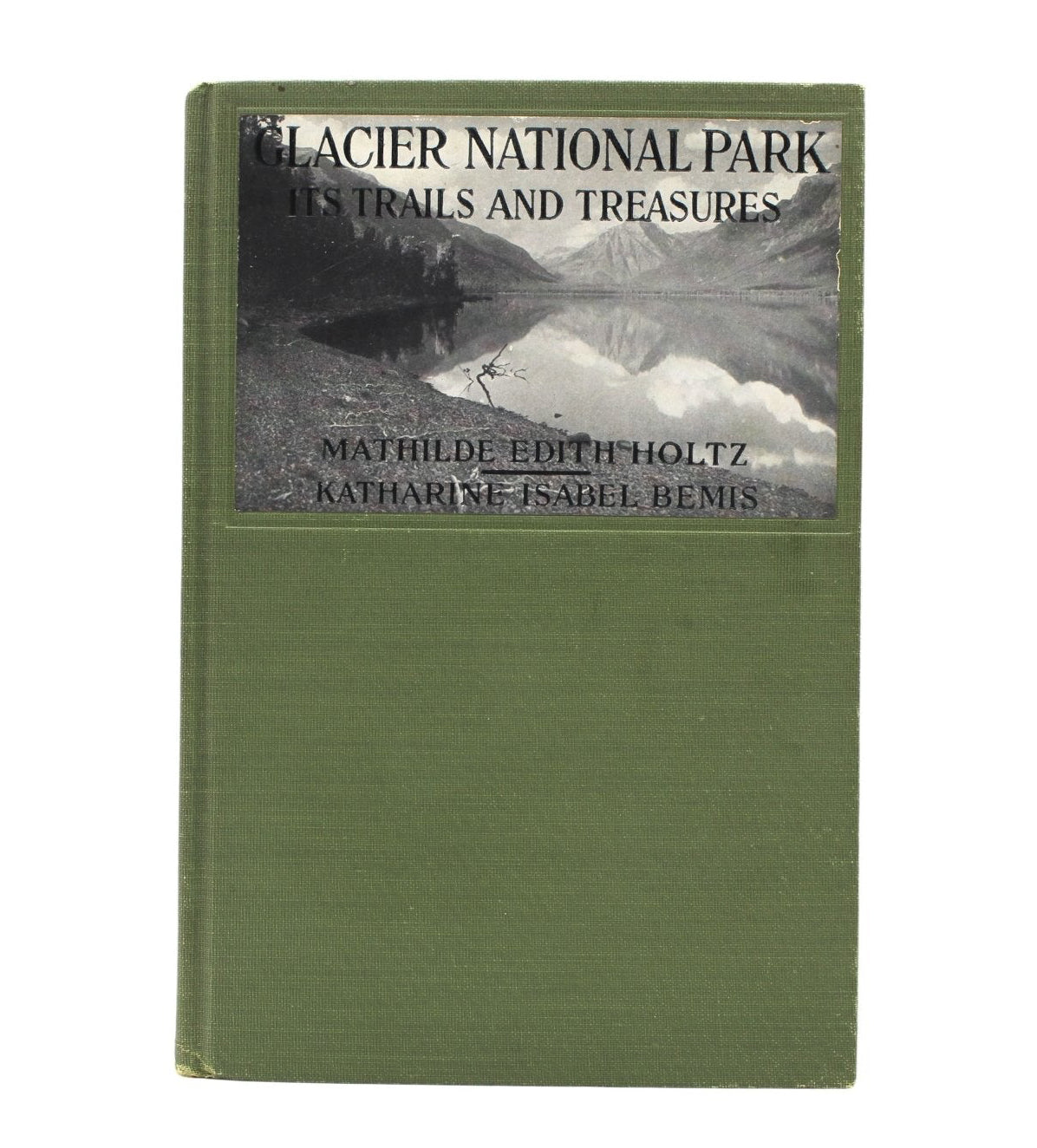
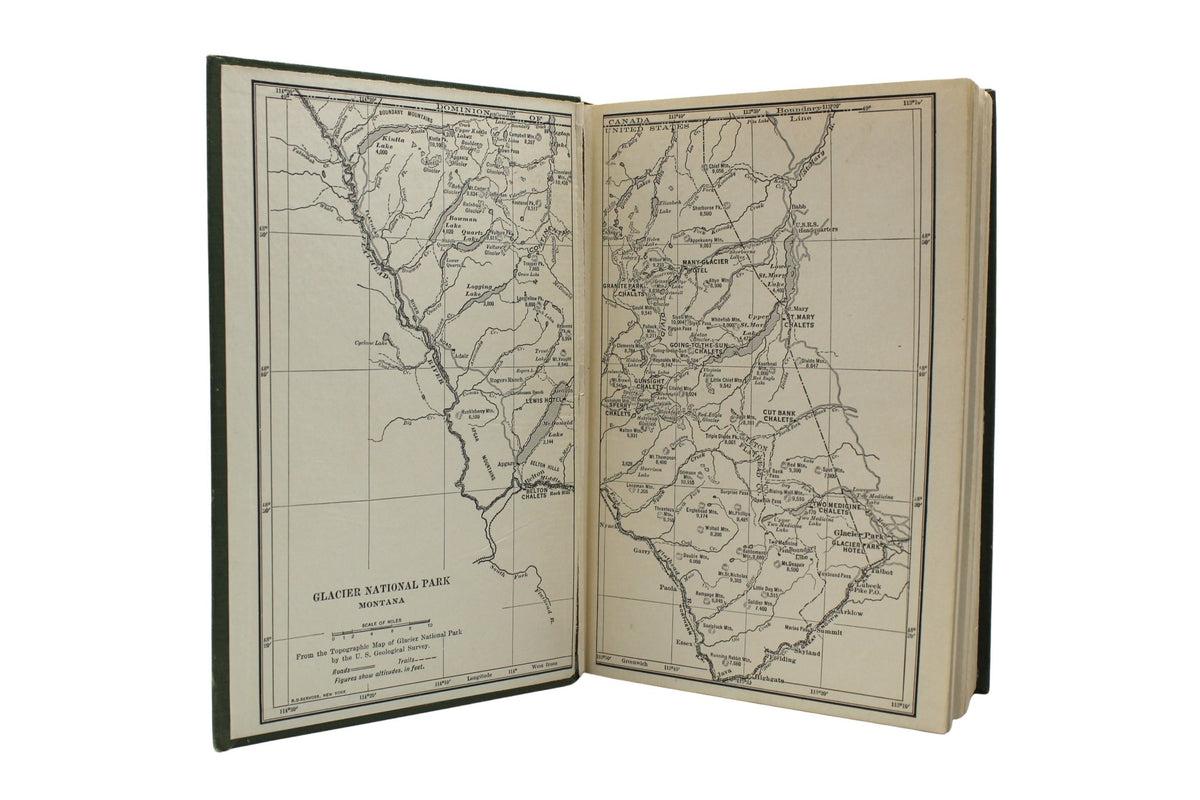
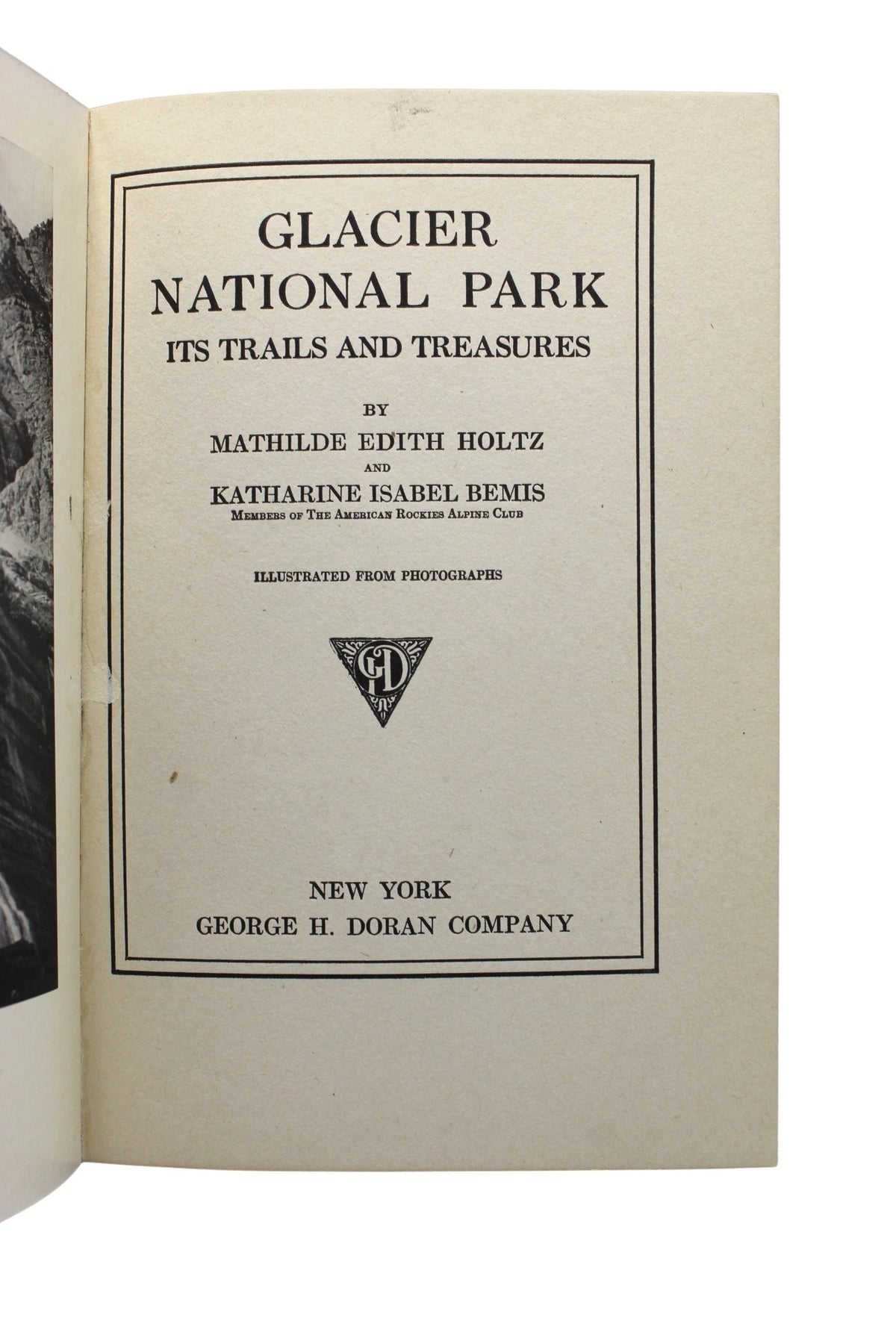
Holtz, Mathilde Edith; Bemis, Katherine Isabel. Glacier National Park: Its Trails and Treasures. New York: George H. Doran Company, 1917. First edition. Octavo. In the publisher's original pale green cloth boards, with a titled photographic pastedown on the front board, black embossed titles to the spine, map endpapers, frontispiece and 19 additional photographic plates.
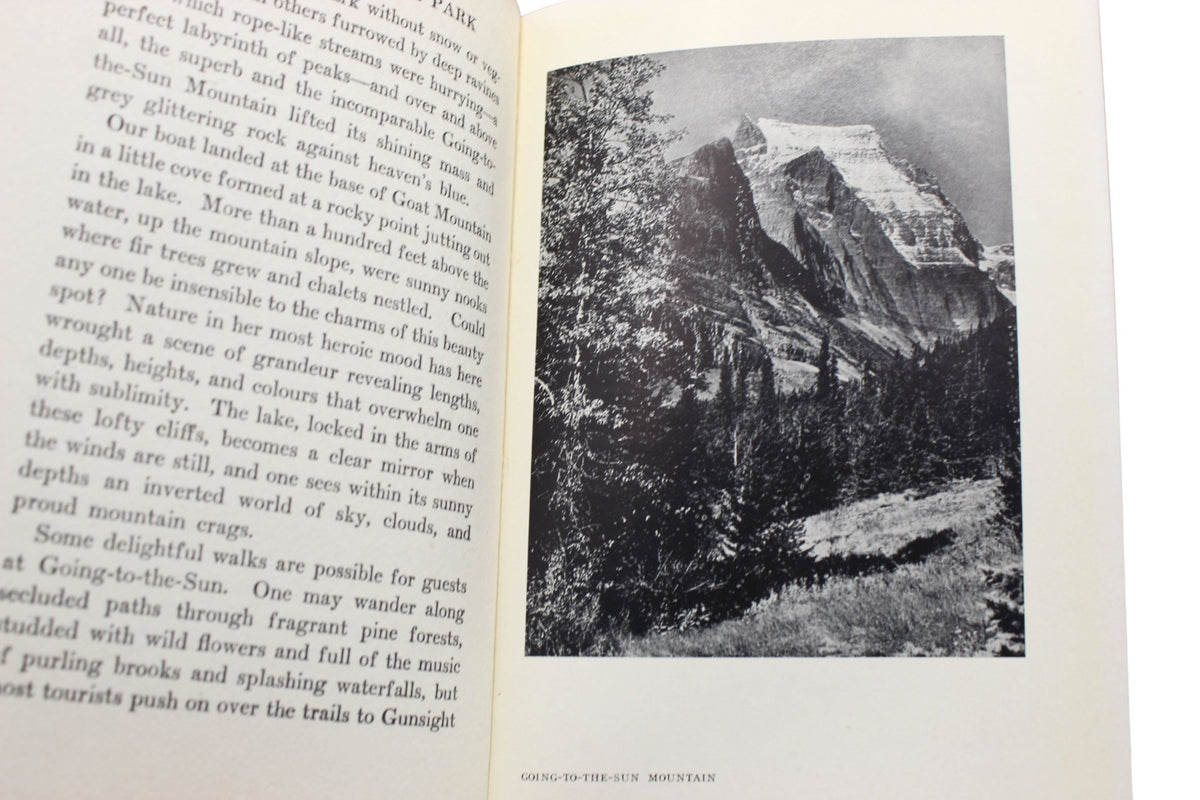
Presented is a first edition of Glacier National Park: Its Trails and Treasures by Mathilde Edith Holtz and Katharine Isabel Bemis, published in New York by George H. Doran Company in 1917. An early and important guide to one of America's most celebrated national parks, the volume documents Glacier's extraordinary natural scenery, developing network of trails and accommodations, and the recreational opportunities that were attracting an increasing number of visitors in the early twentieth century. The book is bound in its original pale green cloth boards, with a titled photographic pastedown on the front board and the title embossed in black on the spine. It retains its “Glacier National Park, Montana” map front endpapers and is illustrated with a photographic frontispiece depicting “Morning Eagle Falls, Piegan Pass Region,” together with nineteen additional photographic plates.
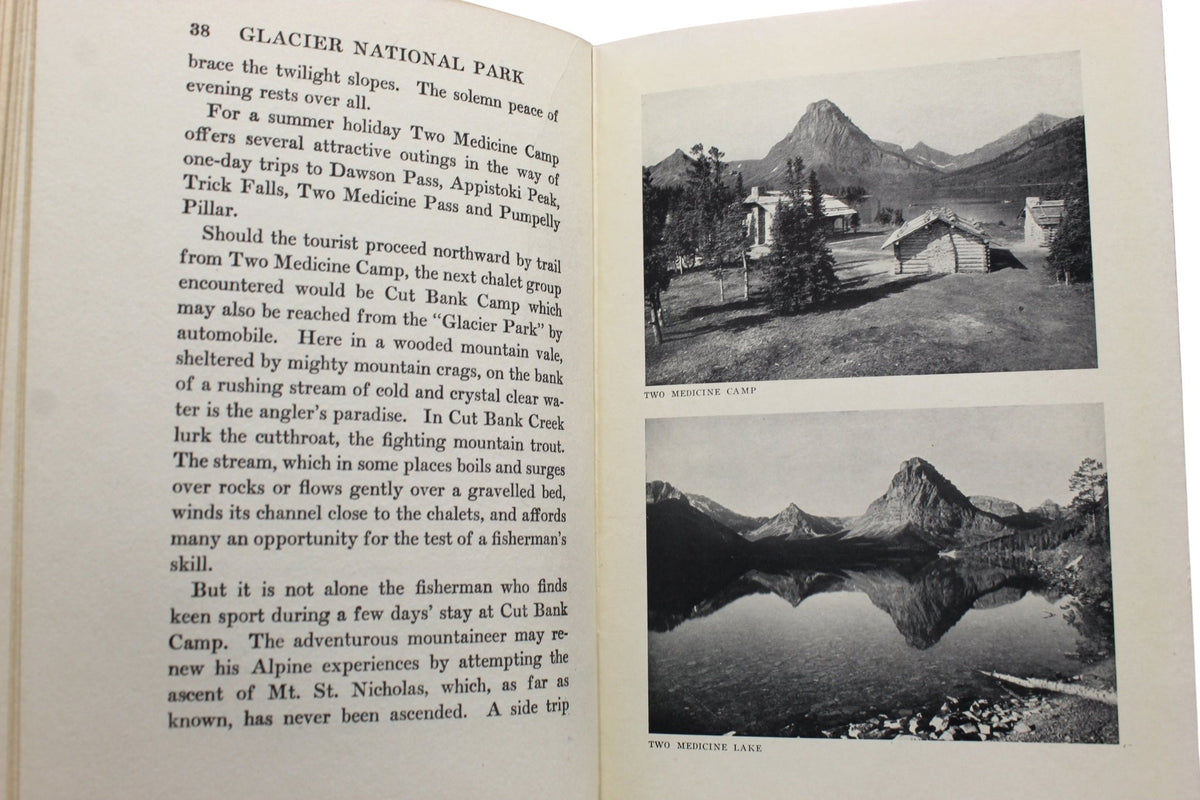
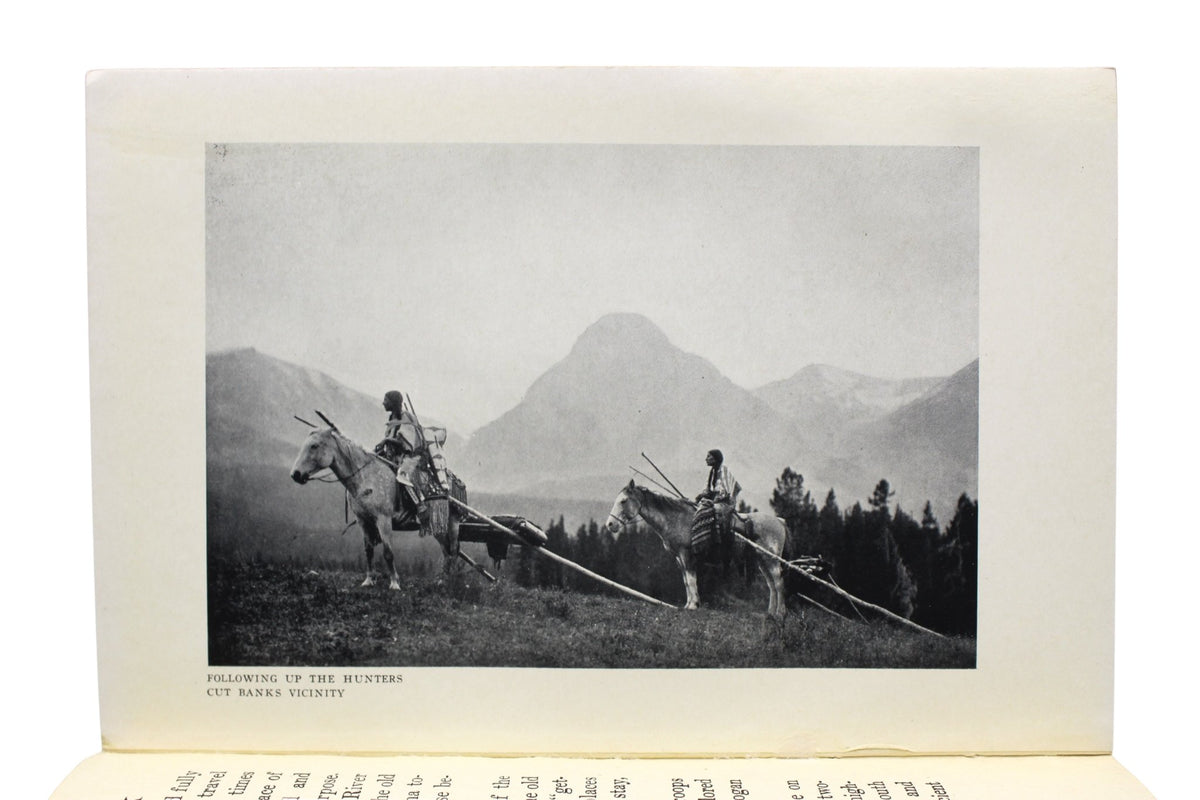
Authors Holtz and Bemis traveled extensively throughout Glacier's mountainous backcountry, much of it on horseback, gathering the material for what became this full-length published guidebook. Glacier National Park: Its Trails and Treasures combines practical information for prospective visitors with descriptions of the park's geography, geology, glaciers, mountain lakes, wildflowers, wildlife, and Indigenous Blackfeet history and traditions. Chapters address accommodations at the park's hotels and chalets, established roads and horseback trails, notable mountain passes, and excursions to some of its most remarkable natural features. Among the subjects explored are the historic Old Travoise Trail, Piegan Pass, known as the “Flower Pass,” the park's mountain lakes and glaciers, concluding with three chapters on the Blackfeet, including their legends, place names, and historical pictographs. The authors also offer observations on the character and expectations of the park's visitors, providing a contemporary account of the emerging culture of American national park tourism.
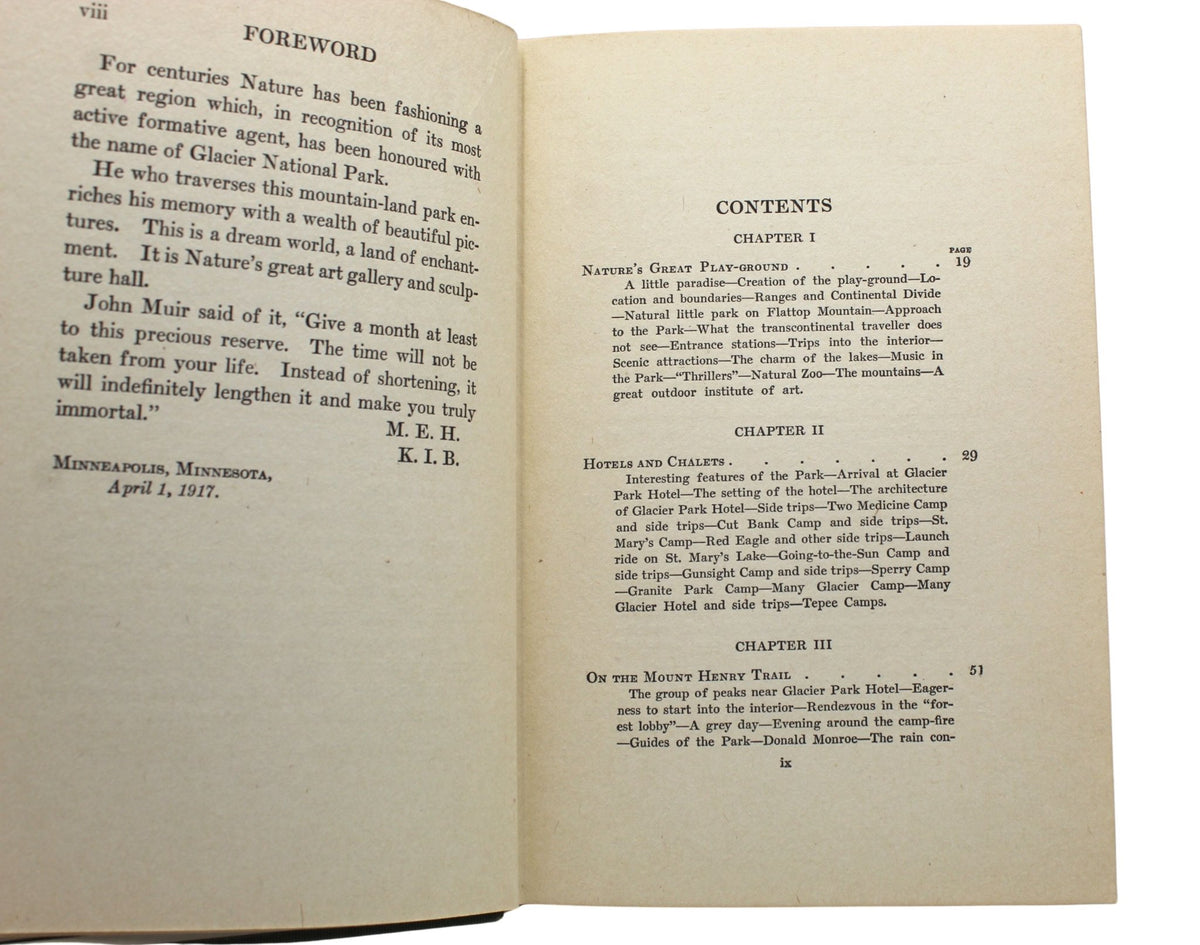
Holtz and Bemis introduce their subject in the preface with an enthusiastic appeal to nature-lovers: “Our design in the following pages is to direct the attention and interest of nature-lovers to one of the newer play-grounds of our country, the Glacier National Park, in the Rocky Mountains of Montana.” They continue by describing the extraordinary natural abundance of the region: “Nature has been almost reckless in equipping this spot with the most characteristic features of beauty and wonder.” Their language captures the romantic spirit of the early national park movement, presenting Glacier not simply as a wilderness to be explored, but as a place of extraordinary aesthetic and restorative value. “This is a dream world, a land of enchantment…It is Nature's great art gallery and sculpture hall,” they write. The preface concludes with a quotation from naturalist John Muir, who urged visitors to “Give a month at least to this precious reserve. The time will not be taken from your life. Instead of shortening, it will indefinitely lengthen it and make you truly immortal.”
Glacier National Park was officially established on May 11, 1910, when President William Howard Taft signed the legislation setting aside approximately one million acres of northwestern Montana as a national park, “for the benefit and enjoyment of the people of the United States.” Although the region had attracted a modest number of recreational visitors since the 1890s, particularly to the Lake McDonald area, its early development as a tourist destination was closely associated with the Great Northern Railway. The railway provided access to the region through its transcontinental route, while local homesteaders initially established modest hotels, cabins, eating establishments, and lake transportation for travelers willing to venture into the mountainous wilderness. By the end of the nineteenth century, several thousand visitors were making their way into the area each summer, drawn by its dramatic scenery, primitive trails, mountain lakes, and glaciers.
The transformation of Glacier into a nationally recognized tourist destination accelerated under Louis W. Hill, son of railroad magnate James J. Hill and president of the Great Northern Railway. Beginning in 1911, Hill devoted considerable attention to the development and promotion of the newly established park, earning the sobriquet “Godfather of Glacier.” The railway constructed substantial hotels at Many Glacier and Midvale, later known as East Glacier, as well as a network of smaller chalets and tent camps throughout the mountains. Connected by horseback trails, these accommodations allowed visitors to travel through the backcountry while enjoying relatively comfortable lodging along the way. Park Superintendent William R. Logan and federal officials likewise supported the development of roads, trails, and visitor facilities, believing that improved accessibility would encourage Americans to experience and appreciate the wilderness. This early emphasis on recreation and tourism helped establish the distinctive character of Glacier as both a protected natural landscape and a destination for outdoor adventure.
Holtz and Bemis's guidebook appeared during this formative period, when the park's infrastructure and national reputation were rapidly developing. Their descriptions provide a valuable contemporary record of the early visitor experience, before the extensive road networks and automobile tourism that would transform the park in subsequent decades. The authors' observations of their fellow travelers are particularly revealing. Describing the ideal Glacier visitor, they write that such tourists are “dignified in manner, and clad appropriately in knickerbocker and meadowbrook riding suits,” arriving “with keen appreciation” of their surroundings. “For them no ride is too strenuous, no climb too fatiguing, no trail too steep!”
CONDITION:
Very good condition. First edition. Octavo. In the publisher's original pale green cloth boards, with a titled photographic pastedown on the front board, black embossed titles to the spine. Pastedown with fading, scratches. Wear to the cloth at corners, bumping to head and tail of spine. Map front endpapers, photographic frontispiece and 19 additional photographic plates, all accounted for. Pages are clean and bright, with only occasional light foxing marks. Lacking dust jacket.
Book Dimensions: 7 5/8" H x 5 1/4" W x 1 1/2" D.
REFERENCES:
C. W. Buchholtz, “The National Park as a Playground,” Journal of Sport History 5, no. 3 (Winter 1978): 22–24.
Pickup available at Colorado
Usually ready in 4 hours
Glacier National Park: Its Trails and Treasures by Mathilde Edith Holtz and Katharine Isabel Bemis, 1917
Colorado
1 Lake Avenue
Colorado Springs CO 80906
United States
Choose options
Frequently Asked Questions
FAQs
Yes, all of our Antiques are certified authentic. Every antique comes with a signed Letter of Authenticity that details the item’s history, its current condition including any conservation, binding, or framing work, and the item’s provenance. The Letters of Authenticity are priced valuations by our authentication specialists, who assure that items are original and unconditionally guaranteed as genuine for life.
We pack and ship your items from our gallery in Colorado Springs. You may also choose to come pick up your order. Antique items are carefully packed and insured during shipping. The shipping price will be calculated at checkout.
We acquire from a variety of trusted sources all over the world, but mostly through auctions and private collections within the United States. All provenance information will be listed on the Letter of
Authenticity accompanying your purchase.