
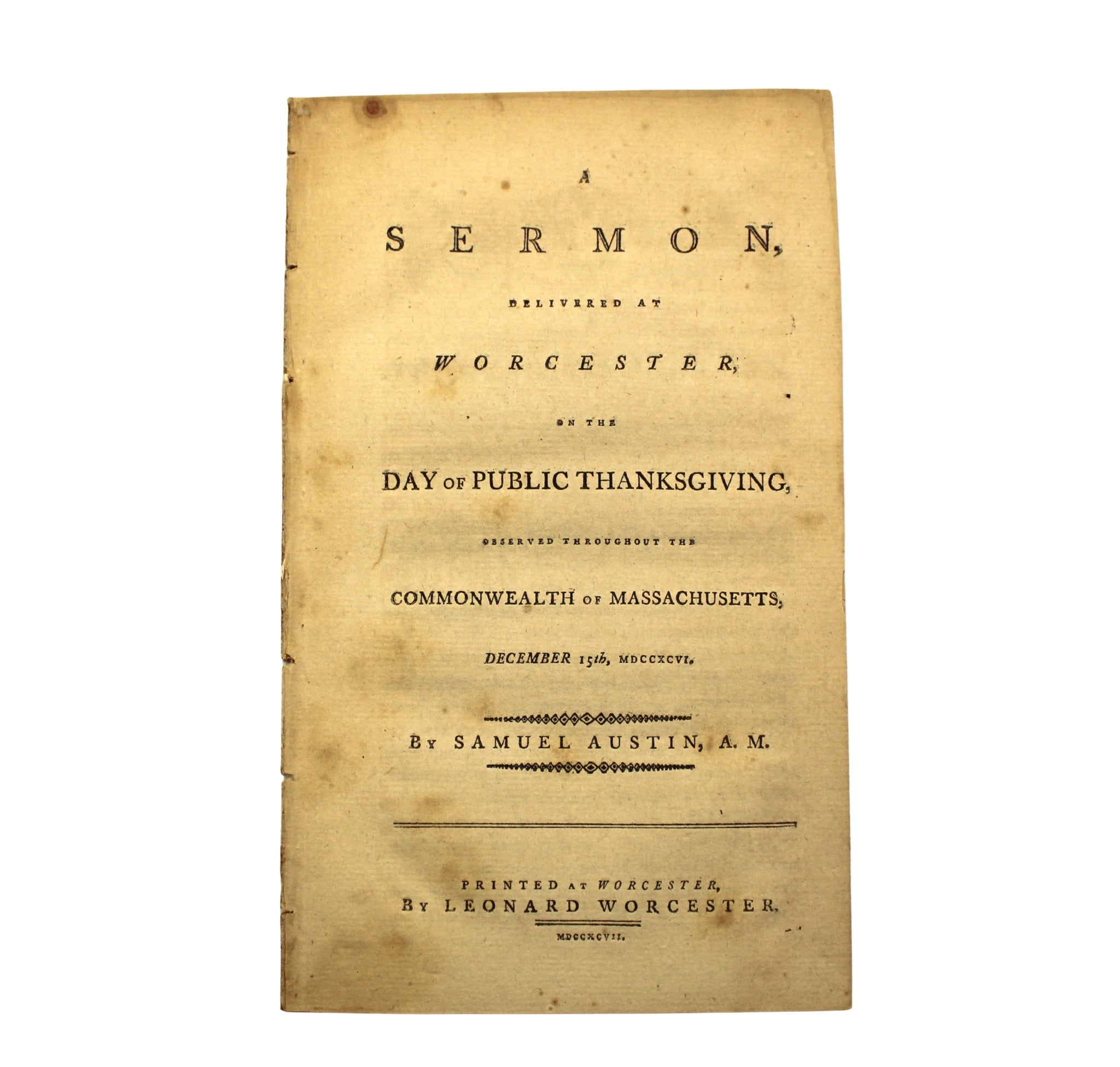
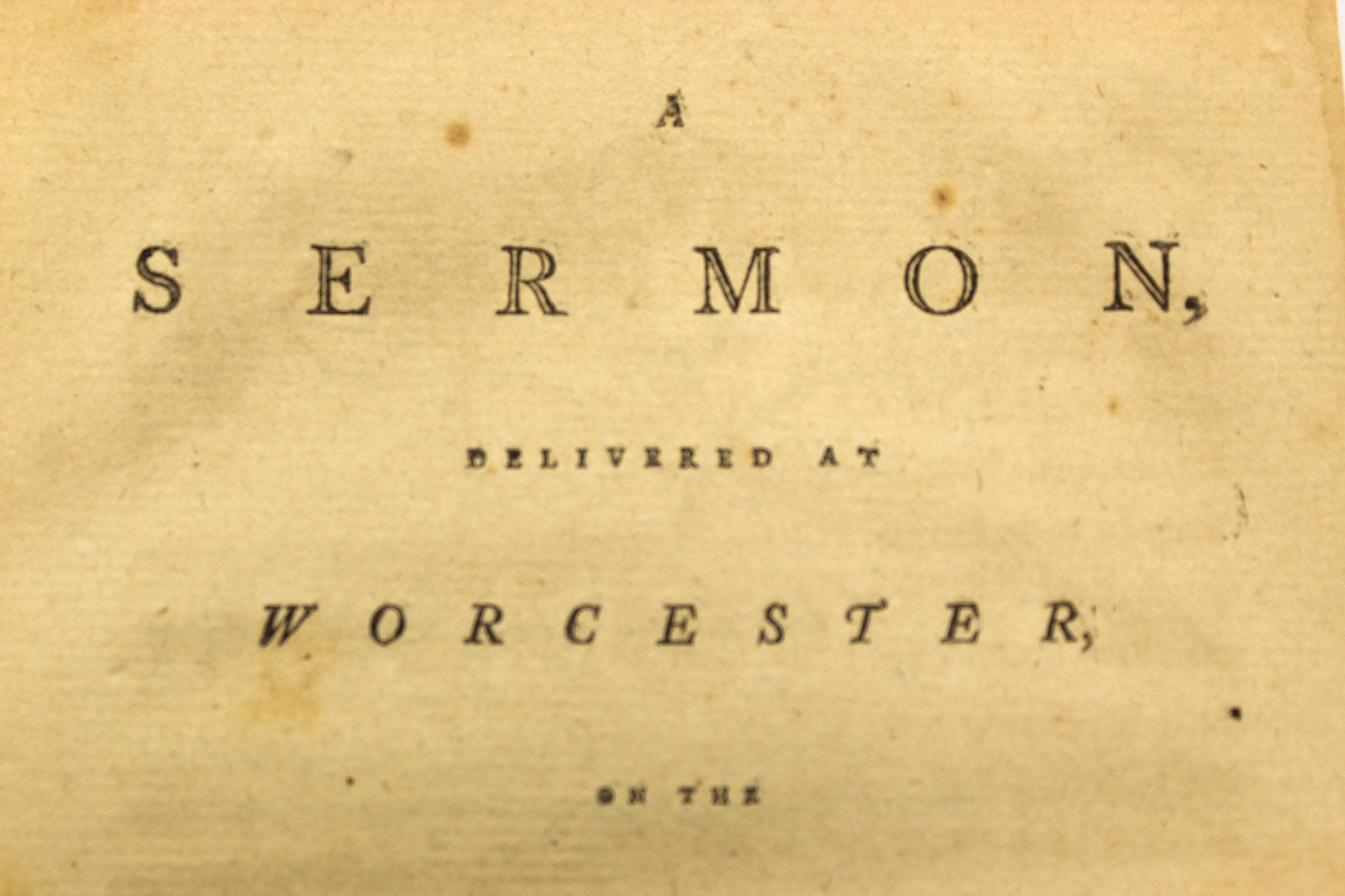
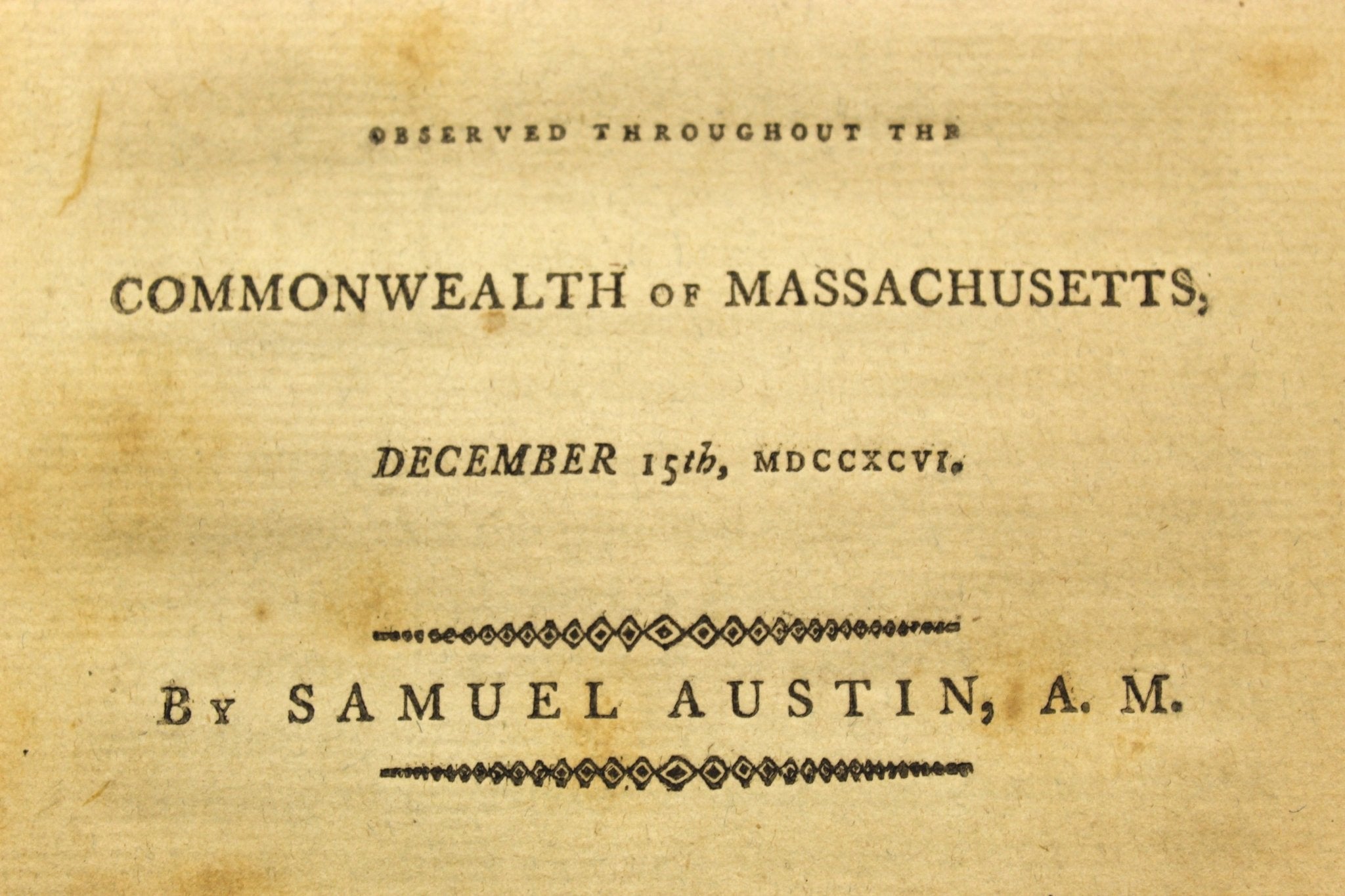
A Sermon Delivered at Worcester on the Day of Public Thanksgiving, Observed Throughout the Commonwealth of Massachusetts, December 15th, MDCCXCVI, by Samuel Austin, Published by Leonard Worcester, 1797
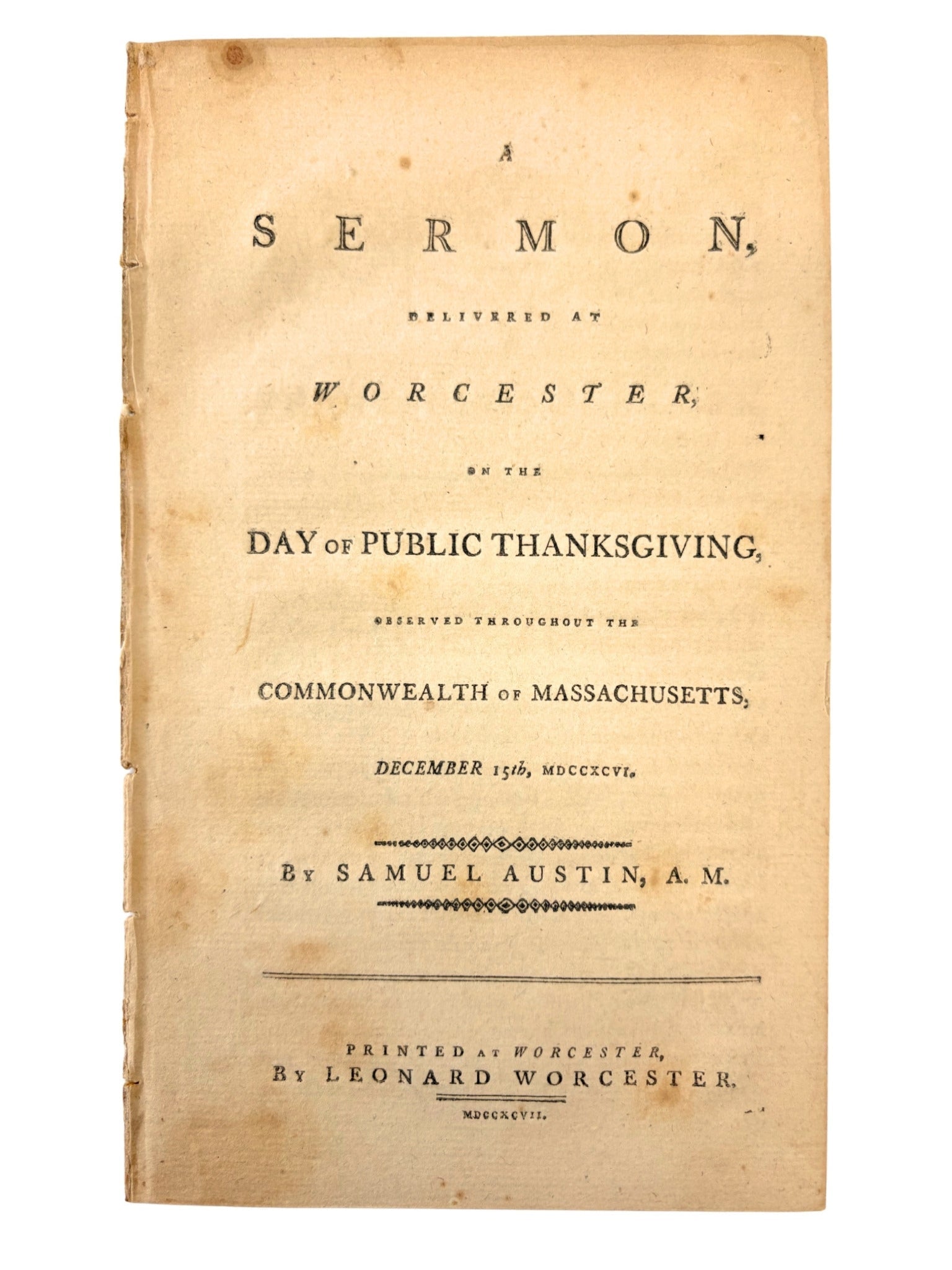
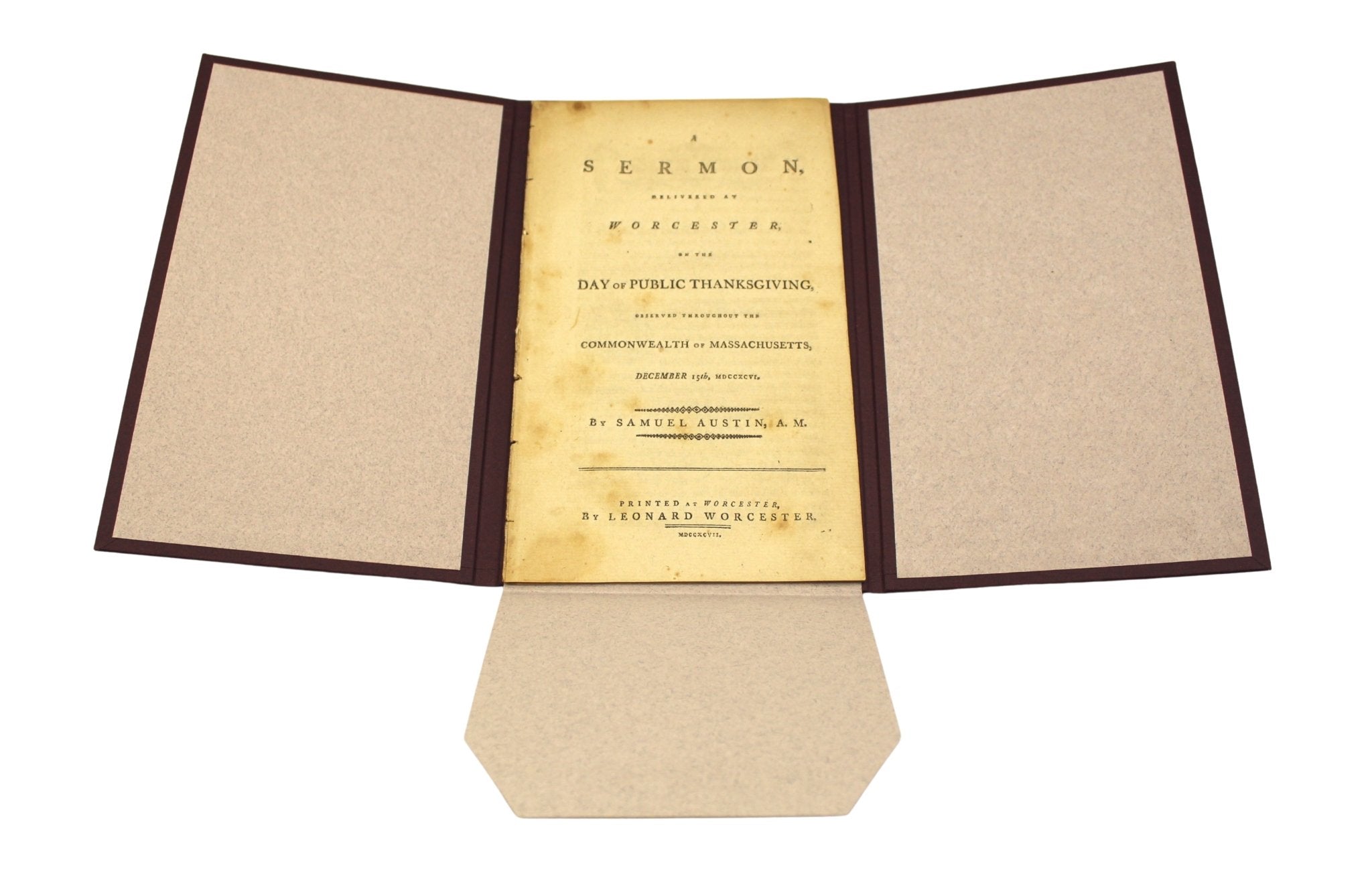
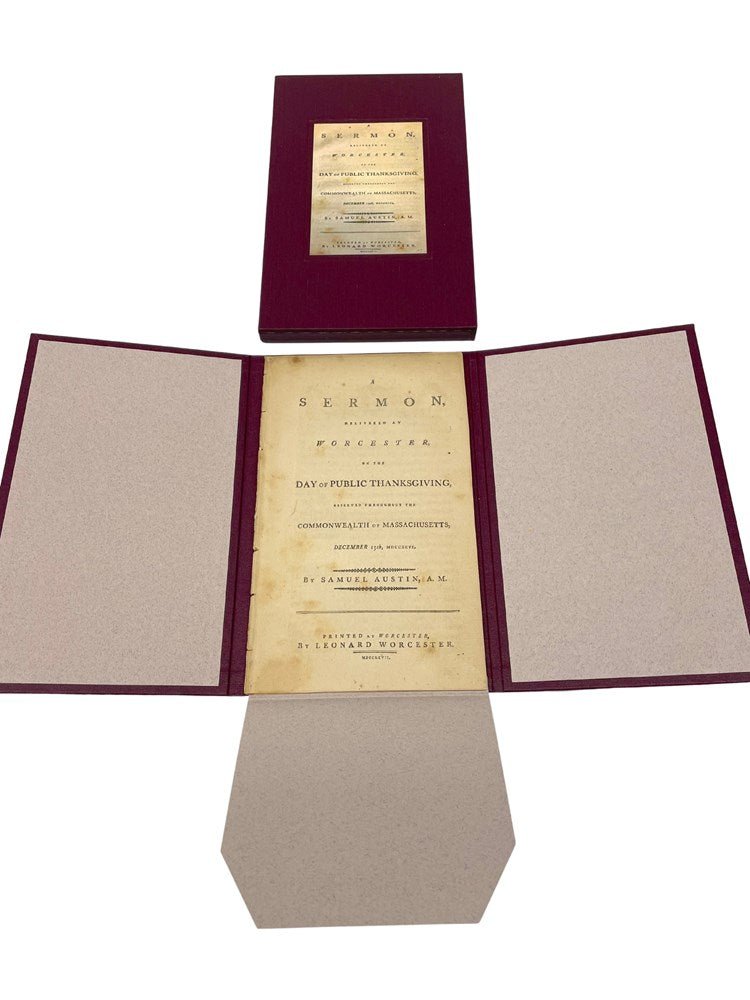
Austin, Samuel. A Sermon Delivered at Worcester on the Day of Public Thanksgiving, Observed Throughout the Commonwealth of Massachusetts, December 15th, MDCCXCVI. Worcester: Leonard Worcester, 1797. First Edition. Original leaves, disbound. Presented in a new archival cloth chemise and matching cloth slipcase with inlay.
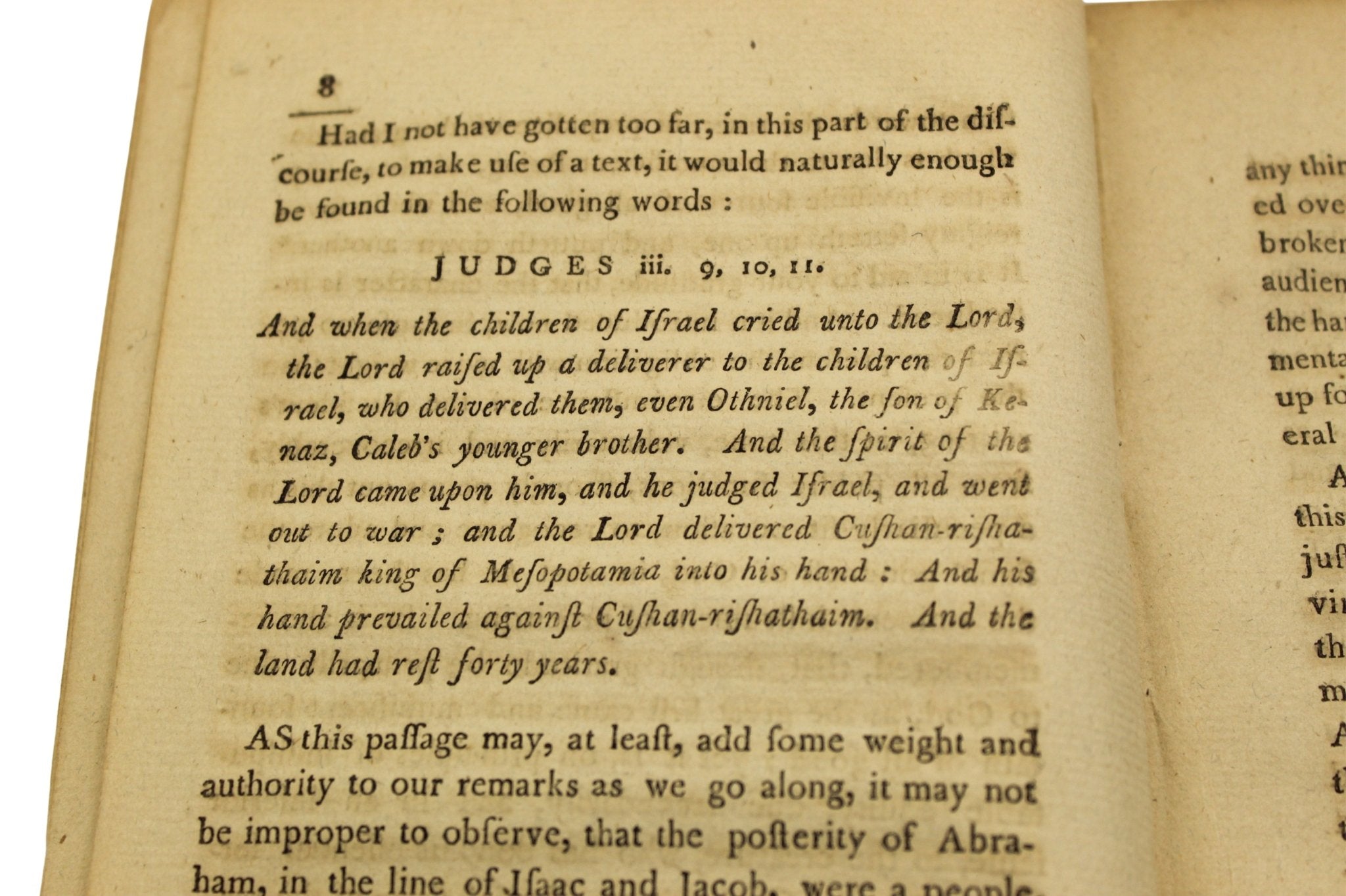
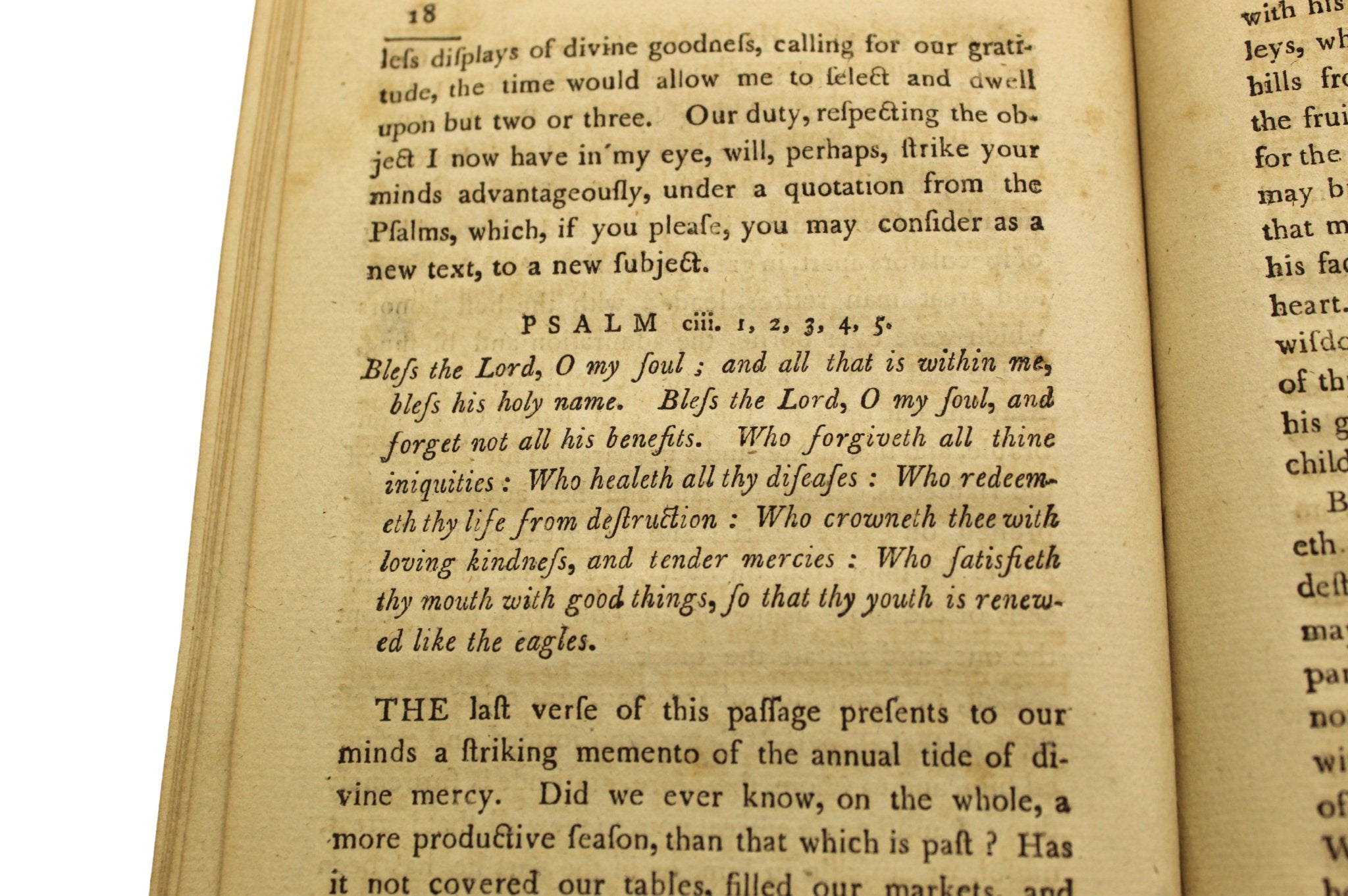
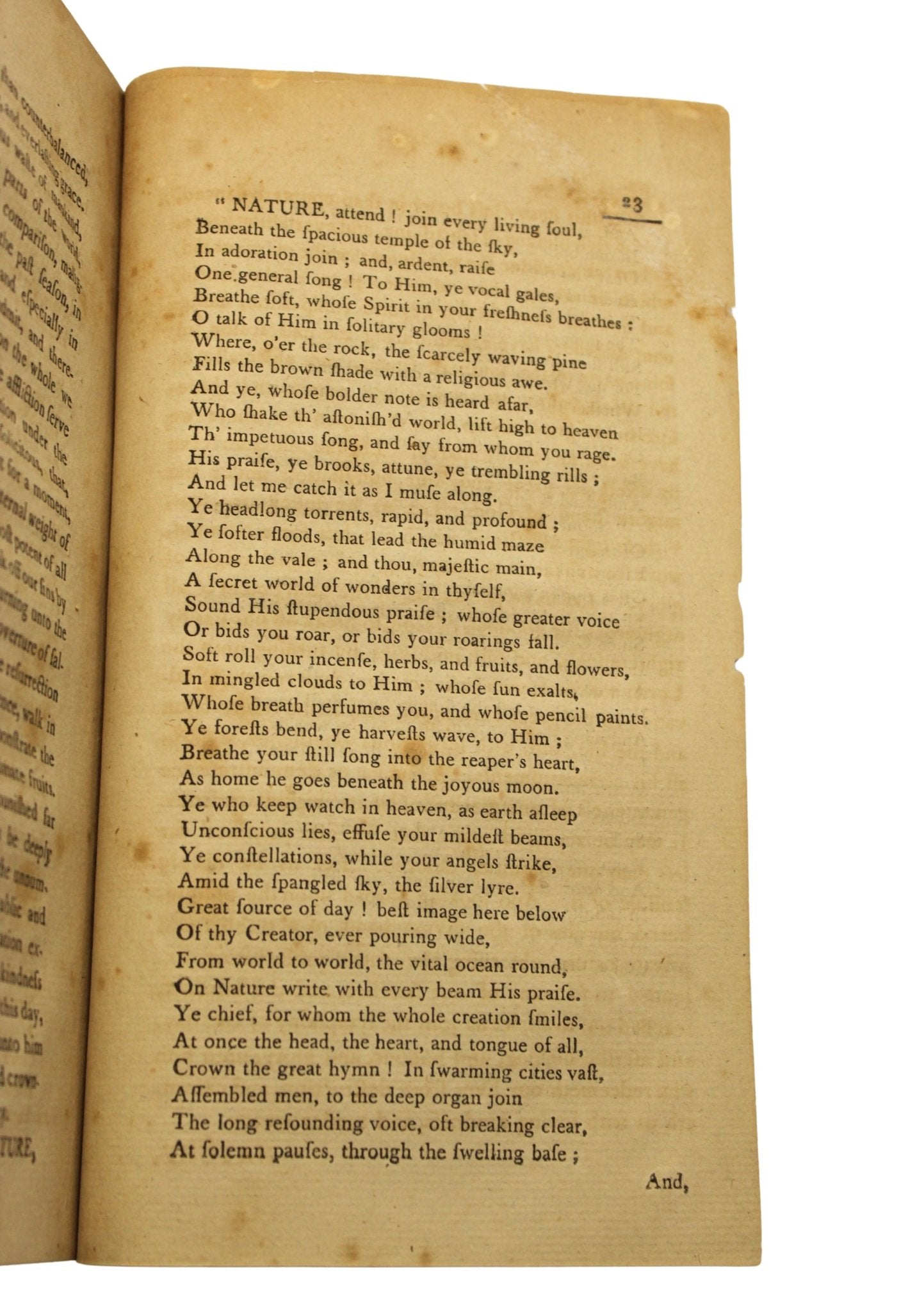
Presented is a first edition printing of a remarkable Thanksgiving sermon delivered by the Reverend Samuel Austin on December 15, 1796, and published that same year in Worcester, Massachusetts by Leonard Worcester. Preached on the eve of George Washington's retirement after two presidential terms, Austin's discourse is both a religious meditation and a powerful reflection on the first decades of the American Republic. Drawing upon Judges III: 9-11 and Psalm 103, Austin interprets the recent history of the United States through the lens of divine providence, presenting Washington as an instrument raised by God to secure the nation's independence and preserve its liberties. The sermon concludes with two pages of verse from James Thomson's The Seasons, reinforcing its themes of gratitude and the benevolence of God’s providence.
Austin opens by celebrating what he describes as the nation's "almost unparalleled national prosperity," giving thanks for the blessings bestowed upon the young republic. He praises the country's "hitherto fortunate exemption from war," particularly from the devastating conflict then engulfing Europe, and rejoices in "the abundance which flows in our cup; the rapid progress of commerce, arts, and learning, of population, and agricultural improvements, by which our Atlantic settlements vie with the crowded cities of Europe, and inhospitable forests are converted into fruitful fields." He further credits the continued strength of the federal government and "the entire preservation of our public liberties, civil and religious" as evidence of God's continued favor toward the United States. Having established a framework of divine intervention, Austin turns to the central figure of his discourse, declaring Washington to be "The Man, the rich gift of a merciful God to the Republic of North America."
The biblical account of Othniel's deliverance of Israel from oppression serves as Austin's principal model. Quoting Judges III, he recalls, "And when the children of Israel cried unto the Lord, the Lord raised up a deliverer to the children of Israel... And the spirit of the Lord came upon him... and the land had rest forty years." Austin draws an unmistakable parallel between ancient Israel and Revolutionary America. Just as Othniel was divinely appointed to rescue Israel, Austin argues that God intervened on behalf of the American colonies, after the British Crown had "stripped us of our property; maltreated and slew many of our countrymen; skirted our borders with fleets and armies; instigated the savages to desolate our frontier; and presented us with no alternative, but unconditional submission, or entire excision." In one of the sermon's most memorable passages, Austin proclaims that God "raised up a deliverer, to us, the children of his American Israel, even George Washington. And the spirit of the Lord came upon him, and, placing himself at the head of our armies, he went out to war; and the Lord delivered the armies of the king of Great Britain into his hand... and the land has had rest thirteen years. This deliverance was incalculably great."
Austin offers an eloquent tribute to Washington's military and civic leadership, praising "the consistency and dignity, which he displayed on all occasions," by which "he intimidated our enemies, baffled their designs, won the public confidence, and held in advantageous poise the public councils, and the public operations." He credits Washington with having "subdued prejudices, wrought wonders almost without means, and led an unformed army to regularity and conquest," while maintaining an integrity that "rose superior to the most potent temptations, which an opulent government could offer."
Austin does not limit his admiration to Washington's conduct during the Revolutionary War. He also commends his presidency during the uncertain years "when old systems of government were dissolving, and new ones were to be formed; when the bonds by which we were holden together were extremely feeble; when the jealousy of party was in danger of sapping the foundation of our political existence; when we were exposed to intrigue and faction." This sermon is very revealing of the reverence with which Washington was regarded during his own lifetime.
Drawing upon Psalm 103, Austin reminds his congregation that God "satisfieth thy mouth with good things; so that thy youth is renewed like the eagle's," interpreting the nation's prosperity as visible evidence of divine blessing. He also reflects upon the recent epidemic that had afflicted Worcester, during which more than two hundred residents died between July and November 1796, invoking the Psalmist's words, "Who healeth all thy diseases: Who redeemeth thy life from destruction." Acknowledging the community's suffering, he consoles his listeners that "God hath remembered mercy; and that his kindness, even when in the depths of our distress, superabounded the strokes of his displeasure," concluding with the exhortation, "We are living. And why are we the living, but to praise God? The living, the living, he shall praise thee." The sermon closes with selections from James Thomson's The Seasons, one of the eighteenth century's most celebrated poetic meditations on nature and Providence.
Reverend Samuel Austin (1760–1810) was among the leading Congregational ministers of the early Federal period. A graduate of Yale College, he served as pastor of the Second Church in Worcester from 1790 until 1803, before becoming President of the University of Vermont. Austin was an influential theologian, educator, and advocate of New England Federalism.
CONDITION:
Very good+ condition. First Edition. Pamphlet. Original leaves, disbound. Paper with light scattered foxing, light stains, and creasing along paper edges. 24pp.
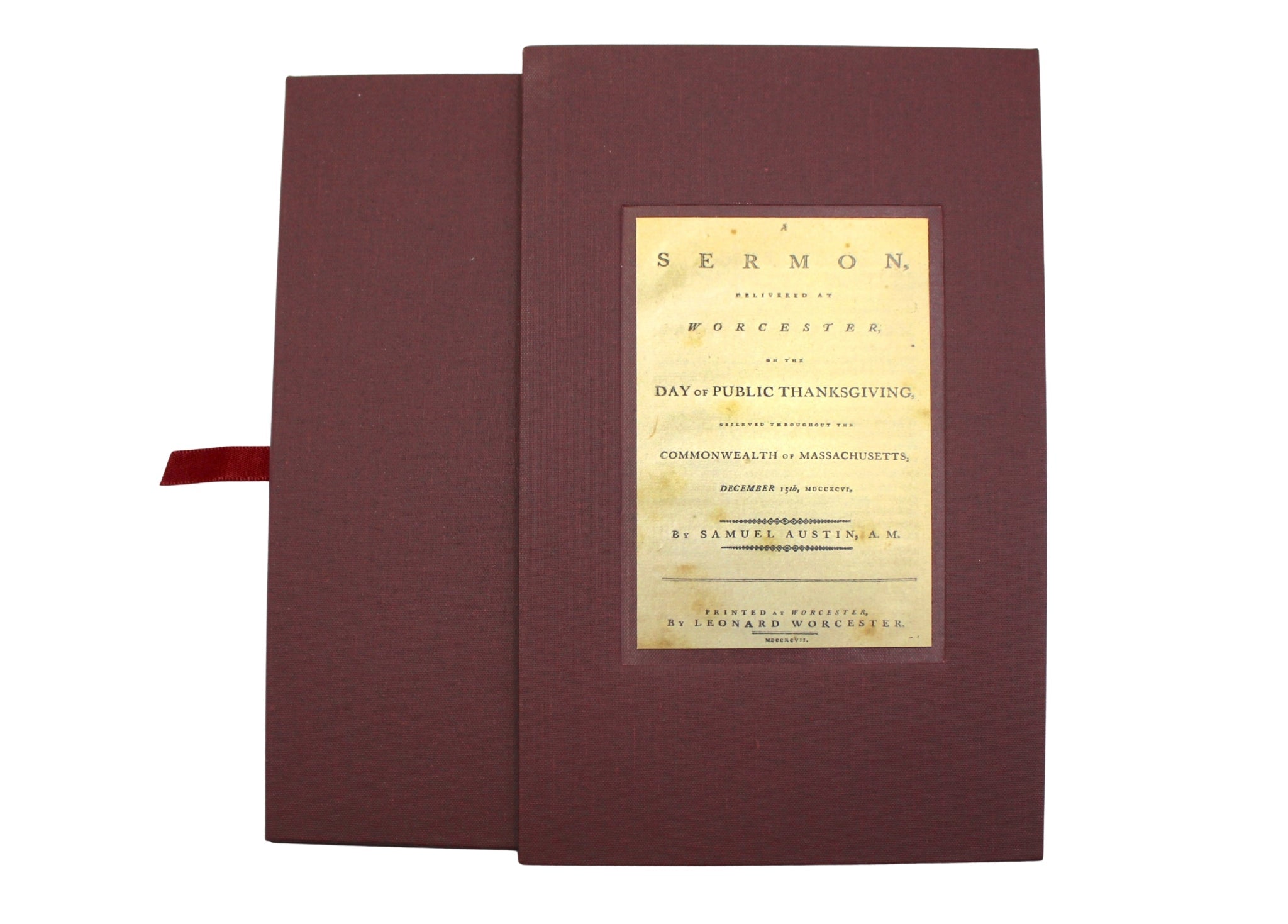
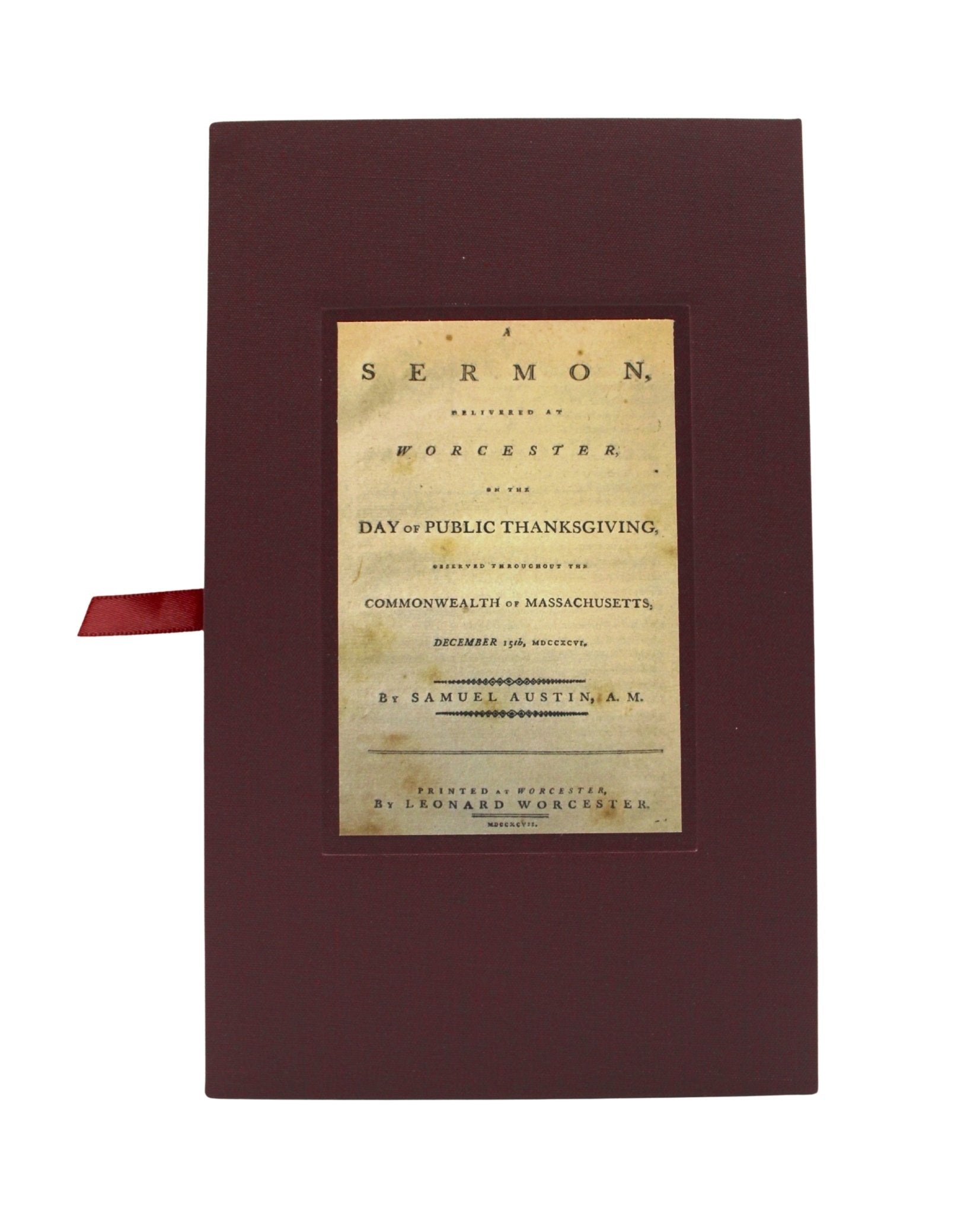
Presented in a new archival cloth chemise and matching burgundy cloth slipcase with inlay and ribbon pull.
Pamphlet Dimensions: 8" H x 4 3/4" W x 1/16" D. Slipcase Dimensions: 8 5/8" H x 5 1/4" W x 9/16" D.
REF: Evans 31757. Nichols 39. ESTC W29156.
Accompanied by our company's letter of authenticity.
Pickup available at Colorado
Usually ready in 4 hours
A Sermon Delivered at Worcester on the Day of Public Thanksgiving, Observed Throughout the Commonwealth of Massachusetts, December 15th, MDCCXCVI, by Samuel Austin, Published by Leonard Worcester, 1797
Colorado
1 Lake Avenue
Colorado Springs CO 80906
United States
Choose options
Frequently Asked Questions
FAQs
Yes, all of our Antiques are certified authentic. Every antique comes with a signed Letter of Authenticity that details the item’s history, its current condition including any conservation, binding, or framing work, and the item’s provenance. The Letters of Authenticity are priced valuations by our authentication specialists, who assure that items are original and unconditionally guaranteed as genuine for life.
We pack and ship your items from our gallery in Colorado Springs. You may also choose to come pick up your order. Antique items are carefully packed and insured during shipping. The shipping price will be calculated at checkout.
We acquire from a variety of trusted sources all over the world, but mostly through auctions and private collections within the United States. All provenance information will be listed on the Letter of
Authenticity accompanying your purchase.