Washington's Horse Blueskin

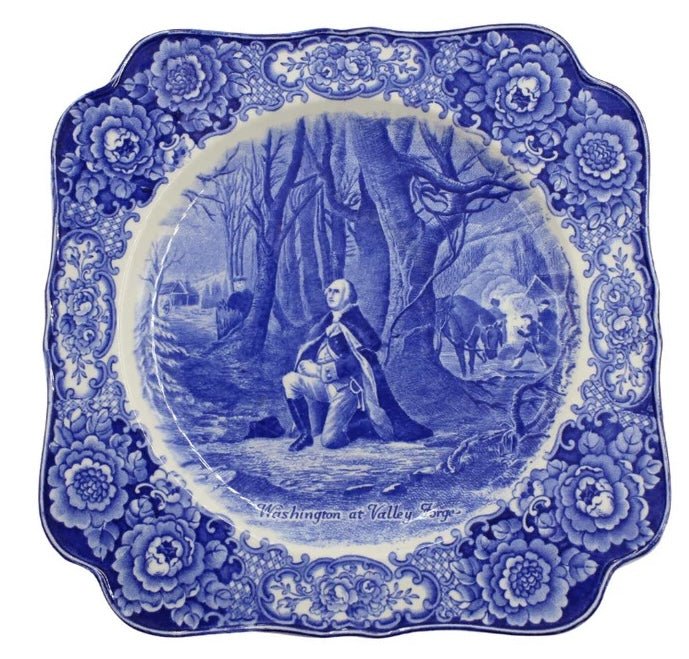
In this painting of George Washington at Dorchester Heights, Washington stands beside his horse, Blueskin, with the city of Boston visible in the distant background. Continental forces occupied and fortified this position in early March 1776 in anticipation of a British assault. Blueskin appears to be riding off as if heading into battle, but Washington confidently reigns him in.

Blueskin was one of Washington’s two primary mounts during the Revolutionary War. The horse was a half-Arabian, sired by the stallion "Ranger,” and a gift to Washington from Colonel Benjamin Tasker Dulany. He was Washington's pre-war foxhunting mount, known for a fiery temperament and the endurance for long cross-country gallops. During the war, Washington preferred the blue roan for marches and long travel. He was a smaller horse than Nelson, Washington’s other mount, but could still easily carry the six-foot-tall Washington.
 Washington usually rode Nelson in battle, as the horse was less skittish around cannon fire. Yet due to Blueskin’s near white hair coat, he was the horse most often portrayed in artwork showing Washington on horseback. The artist John Trumbull depicted Blueskin beside the general in the painting Washington at Verplanck's Point (1790). Washington Before Yorktown by Rembrandt Peale shows Washington astride Blueskin, confidently leading troops into battle. Later artists, like William Ranney, took an even more dramatic and heroic approach, as seen in Washington Rallying the Americans at the Battle of Princeton, completed in 1848.
After the Revolutionary War, Blueskin was retired to Mount Vernon and then gifted back to the Dulany family.